ESET: Antivirus and Cybersecurity for Freelancers
Fastlancer Team · Updated: Aug 11, 2026
Short verdict
Ideal for
- Freelancers handling client data on Windows or Mac devices
- Small businesses with strict data-privacy requirements seeking an EU vendor
- Users on older hardware looking for low-resource protection
Not ideal for
- Anyone who wants a permanently free option
- Users expecting a password manager in the bundle
- Entry price
- From $49.99 / month
- Free to start?
- Yes — 30 days free, no credit card required
- Stands out for
- Industry-leading malware detection (AV-TEST/AV-Comparatives in the top cluster of AV-Comparatives and AV-TEST since 2014), EU-developed, and the lightest system footprint of any major antivirus suite.
As a freelancer or small-business owner, you handle client data daily, work across multiple devices (laptop in the café, tablet at a client site, phone everywhere), and click through dozens of emails. That makes you a high-value target for ransomware, phishing, and compromised software downloads. The built-in Microsoft Defender is solid, but it isn't a professional protection suite — especially not when sensitive client data flows through your workflow and a security incident could be a reportable breach.
ESET, based in Slovakia, has been one of Europe's longest-running antivirus vendors since 1992 and consistently ranks in the top-3 at independent test labs — with the lowest system footprint among the major providers. We've reviewed the 2026 product lineup, tested the features most relevant for self-employed professionals, and compare ESET head-to-head with Bitdefender, Norton, and F-Secure.
As of June 2026. We re-check pricing regularly — verify on the official ESET website before purchase, as seasonal promotions are common.
What is ESET?
ESET is a Slovak cybersecurity vendor headquartered in Bratislava, founded in 1992 under the name NOD — making it one of the oldest European antivirus makers in continuous operation. The company has remained independently owned for over 30 years, with no corporate parent, and now employs more than 2,000 people worldwide. With over 110 million users across 200+ countries, ESET is consistently ranked among the top-5 antivirus vendors globally.
The core of ESET's protection is the NOD32 engine — the detection technology that has been refined across every product generation and that has produced top results at AV-TEST and AV-Comparatives for over a decade. Unlike many competitors, ESET leans heavily on heuristic analysis rather than signature lookups alone — which makes it particularly effective against zero-day threats, malware that is not yet in any signature database.
Key features of ESET
Real-time virus protection with NOD32 engine: Multi-layer detection through signature databases, heuristic analysis, and machine learning — the engine is continuously fed with threat intelligence from ESET's global sensor network.
Ransomware Shield: Monitors processes that attempt to encrypt many files at once and blocks them automatically — critical for freelancers whose client project files need to stay unencrypted and accessible.
Banking & Payment Protection (Premium and up): A specially hardened browser launches automatically when you open online-banking or payment pages, protecting against keyloggers, screen-capture malware, and man-in-the-middle attacks. Note: ESET discontinued its integrated Password Manager in late 2025 — for password management, we recommend Bitwarden or 1Password as standalone alternatives.
VPN (now from Premium): Integrated VPN with unlimited data, servers in 30+ countries, AES-256 encryption — useful for freelancers who frequently work on public Wi-Fi.
Anti-phishing and safe browsing: Real-time blocking of known scam sites and fake login pages — important if you regularly open emails from new prospects and clients.
LiveGuard cloud analysis: Suspicious or unknown files are detonated in a cloud sandbox before they touch your device — protection against malware that's not yet in any database.
Multi-platform single license: Windows, macOS, Android, iOS, and Linux — one license covers them all, where most competitors charge extra per platform.
Lowest system footprint of any major vendor: Independent performance tests at AV-Comparatives have placed ESET at the top of resource-efficiency rankings for years.
Who should use ESET?
ESET is the right choice if you prioritize protection, performance, and data jurisdiction over interface polish. It's especially valuable for freelancers and small-business owners who process client data on their devices and need a vendor with EU data sovereignty for GDPR or regulated industries. ESET is also one of the strongest options for users on older hardware — the low resource footprint makes a real difference on laptops more than 5 years old.
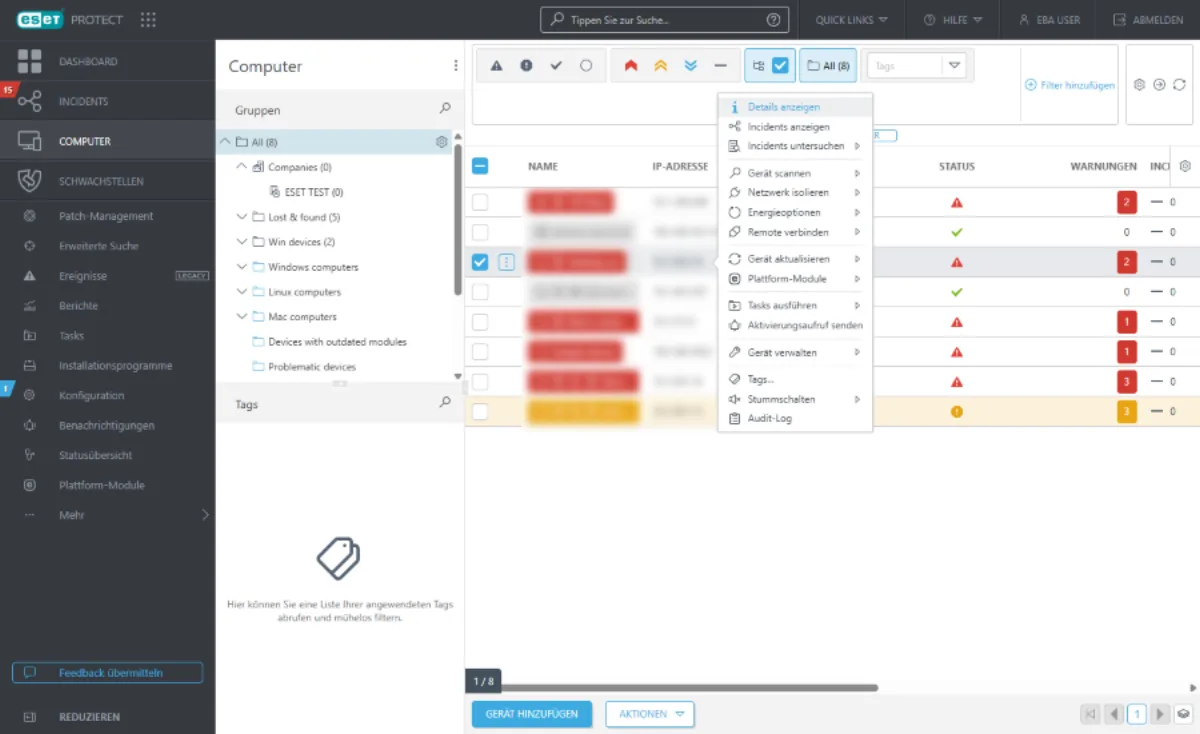
Small teams with 3–25 devices should go straight to Small Business Security: central cloud management without an IT team, protecting workstations and mobile devices from one dashboard. If you want every layer (antivirus, VPN, encryption, identity protection) from a single vendor, the Ultimate tier is the bundle to pick; for pure endpoint protection, Essential covers the basics.
ESET pricing 2026: what does each tier cost?
Four consumer tiers plus a business edition for small teams. The price follows device count, not the tier name — bundles for three, five or ten devices cut the per-device cost noticeably once laptop, tablet and phone need covering together.
The ladder itself: the entry tier delivers real-time virus protection, a ransomware shield and anti-phishing, which is enough for a single work device. The second tier is the standard choice for working professionals, adding banking protection, encryption for sensitive files and cloud analysis. The third adds identity protection with dark-web monitoring; the business edition adds a central management dashboard.
A 30-day trial is available for every tier, no credit card. Renewal prices are typically lower than new-subscription pricing — unusual in this category — and multi-year terms cut them further.
Pros & Cons
Pros
- Top-cluster at AV-TEST and AV-Comparatives for years
- Low system footprint, runs on older laptops
- Banking & Payment Protection with hardened browser
- EU-based vendor, GDPR-friendly, no US exposure
- Single license covers 5 platforms
Cons
- No free tier, only 30-day trial
- Less polished interface than Bitdefender or Norton
- No password manager, discontinued in 2025
ESET vs. alternatives
Bitdefender — the direct EU competitor (Romania). Reaches similar AV-TEST scores as ESET, has a more modern interface, and bundles a 200 MB/day VPN even in its lowest tier. Slightly heavier on system resources, marginally more expensive at the premium level.
Norton 360 — US vendor with the broadest all-in-one bundle (VPN, cloud backup, identity protection, parental controls already in the standard tier). The downside: Norton is subject to the US CLOUD Act, which can be a non-starter for businesses with EU clients or regulated data. Also the highest system footprint of the three majors.
F-Secure Total — Finnish EU vendor with a strong privacy focus and a built-in VPN. Solid protection scores, but more expensive than ESET with a smaller overall feature set. A good fit if interface clarity matters most.
Kaspersky — technically highly rated, but no longer recommended for EU-based professionals due to its Russian origin and the political/sanctions context (Germany's BSI warning, March 2022) — still applicable in 2026.
For a complete overview of security and privacy tools for self-employed professionals, see our Security Tools overview.
Pricing
Essential
$49.99
per year / 1 device
- Real-time virus and ransomware protection
- Anti-phishing and safe browsing
- Multi-platform: Windows, macOS, Android, iOS, Linux
Premium
$69.99
per year / 1 device — most popular
- Everything in Essential
- Banking & Payment Protection (hardened browser)
- Data encryption for sensitive files
Ultimate
$89.99
per year / 5+ devices (Ultimate has a five-device minimum)
- Everything in Premium
- ESET VPN (unlimited data)
- Identity protection and dark-web monitoring
Small Business Security
Contact sales
from ~$230/year for 5 devices
- Central cloud management dashboard
- Protection for workstations and mobile devices
- Optional file-server protection
Prices may change — check the official website for current plans.
Alternatives by use case


Frequently Asked Questions
What is ESET?
ESET is a Slovakian cybersecurity vendor that has been developing antivirus and endpoint-security solutions since 1992. Headquartered in Bratislava, it is one of the longest-running European antivirus makers, with over 110 million users worldwide. ESET is best known for its NOD32 engine, which has consistently scored top results at independent test labs AV-TEST and AV-Comparatives for over a decade.
How much does ESET cost in 2026?
ESET sells device bundles rather than per-device prices, so the cost follows how many devices you cover, not the tier name. The second tier is the standard pick for working professionals, adding banking protection, unlimited VPN and file encryption. Unusually for this category, renewals are typically cheaper than first-year pricing.
Is ESET free to use?
No — ESET does not offer a permanently free tier. There is, however, a 30-day free trial for all consumer plans, with no credit card required. Users looking for a free antivirus are better served by the built-in Microsoft Defender on Windows or by Bitdefender Free — although both offer significantly fewer features than ESET's paid tiers.
How effective is ESET's protection?
ESET has consistently ranked in the top-3 at AV-TEST and AV-Comparatives — the two leading independent antivirus test labs — for over 10 years. In recent 2025/2026 tests, ESET regularly achieves real-world malware detection rates of 99.8–100% while remaining among the lightest-footprint vendors. The NOD32 engine is especially strong at heuristic detection of zero-day threats — malware not yet covered by signature databases.
ESET or Bitdefender — which is better?
Both rank at the top of the protection charts. Bitdefender has a more modern interface, more convenience features in the entry tier, and includes a 200 MB/day VPN from the lowest plan. ESET is more technical, has the lightest system footprint on the market, and as a Slovakia-based vendor is a cleaner fit for strict data-privacy requirements (no US CLOUD Act exposure). For freelancers on older hardware or with regulated client data, ESET is the better pick; if you value modern UX, Bitdefender wins.
Is ESET suitable for small businesses?
Yes — ESET Small Business Security is built for teams of 3 to 25 devices without a dedicated IT department. The central cloud management dashboard lets you push policies, monitor threats, and roll out updates across Windows, macOS, Android, and iOS devices from a single web console. Optional add-ons cover file-server protection and Microsoft 365 mail security. For consultancies, design studios, or small agencies handling client data, this is one of the most cost-effective business endpoint solutions in the EU.
When is Ultimate worth it over Premium?
The Ultimate tier ($179.99/year (5-device minimum)) is worth the upgrade if you regularly work from public Wi-Fi (coworking spaces, hotels, cafés) and want an unlimited VPN — otherwise you'd pay $3–7/month extra for a separate VPN like NordVPN or ProtonVPN. The included identity protection with dark-web monitoring is also useful for self-employed professionals managing many online accounts and client logins. For pure home-office endpoint protection without a VPN need, Premium ($59.99/year) is enough.
Verdict
ESET is the technically polished pick for freelancers and small businesses who care more about protection, performance, and data sovereignty than about a flashy interface. The consistently high detection rates at AV-TEST and AV-Comparatives, the lowest resource footprint among the major vendors, and the EU data jurisdiction make ESET especially attractive for self-employed professionals handling client data. If you want a full bundle including VPN, the Ultimate tier is the right choice; for pure endpoint protection, Essential covers the basics. ESET only loses ground if you prioritize a polished dashboard or want a built-in password manager — ESET discontinued its own in late 2025, and that's where Bitdefender wins.