Best Security Software for Small Business 2026: 6 Tools Compared
Fastlancer Team · Updated: Aug 18, 2026
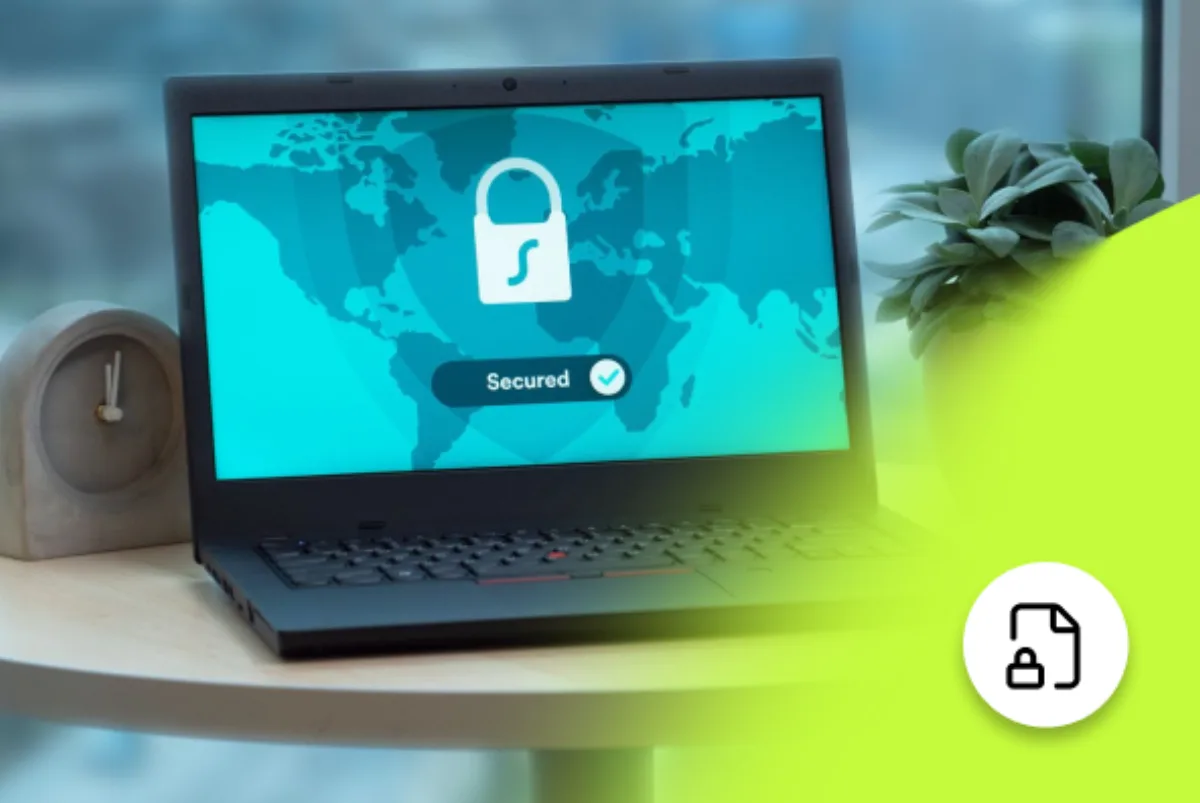
Security software for a small business breaks into three jobs that people routinely confuse for one: keeping malware off the machines (antivirus), keeping the connection private on networks you do not control (VPN), and keeping mail and files unreadable to anyone but you (encrypted workspace). Buying two tools that do the same job while leaving the third gap open is the most common mistake at this size. This guide compares the 6 security tools we have reviewed in depth, sorts them by which job they actually do, and says plainly which one to buy first.
In short
A note on the prices below: the four VPNs price by region. The figures shown here are the ones published to European visitors, verified in August 2026 — a US checkout displays the corresponding dollar amounts. Avast and Proton are quoted in US dollars.
Antivirus vs VPN: two different problems
This is the section most comparison pages skip, and it is the one that decides whether your money is well spent.
Antivirus runs on the device. It watches files and processes and stops viruses, malware and ransomware before they execute, warns you off phishing pages, and checks whether the Wi-Fi you just joined is unsafe. If a client sends a compromised invoice attachment, this is the layer that catches it. If ransomware encrypts the folder holding six months of client work, no VPN in the world would have helped.
A VPN encrypts the connection. It wraps the traffic between your machine and the internet and masks your IP address, which is what makes café, coworking and hotel Wi-Fi safe to work on, and what lets you reach tools and services that are geo-restricted. It does nothing about a malicious download — once a file is on your disk, the tunnel is irrelevant.
Which one to buy first
- Antivirus first if the machines hold the value: client files, invoices, project archives, and you mostly work from one fixed location.
- VPN first if the network is the exposure: cafés, coworking desks, hotels, client offices, airport and conference Wi-Fi.
- Both, in one bill, if you want to stop thinking about it: Surfshark One includes antivirus in the VPN subscription.
- Do not assume a VPN replaces antivirus. It does not, and the reverse is equally untrue.
The two layers do blur at the edges, which is worth knowing before you buy twice. Surfshark One bundles a real antivirus with real-time protection and scheduled scans into the VPN plan. NordVPN ships Threat Protection Pro, which blocks malware, trackers and dangerous sites even when the VPN itself is not connected. ExpressVPN Basic includes Lite Protection against ads and malicious sites, and the Advanced tier adds tracker blocking and a password manager. Avast Ultimate Max goes the other direction and folds SecureLine VPN into the antivirus suite. None of these bundled halves is as complete as the dedicated product, but for a one-person business they are frequently enough.
The third layer — encrypted mail, encrypted file storage and a proper password manager — is where Proton for Business sits, and it is the one small businesses postpone longest. If your inbox is where the sensitive material actually lives, that is the layer to fix. For the password half specifically, see our separate guide to the best password managers for small business.
Comparison table: security software for small business at a glance
| Tool | What it is | Free option | From | Devices |
|---|---|---|---|---|
 Surfshark One Surfshark One |
VPN + antivirus | 7-day trial, 30-day money-back | €2.49/mo (24-month term) | Unlimited |
 Avast Avast |
Antivirus | Yes — free forever | $0 · Premium from $49.08 in year one | 1–10 |
 NordVPN NordVPN |
VPN | No — 30-day money-back | €3.49/mo (2-year term) | 10 |
 ExpressVPN ExpressVPN |
VPN | No — 30-day money-back | €2.49/mo (28-month term) | 10–14 |
 CyberGhost CyberGhost |
VPN | No — 45-day money-back | €2.49/mo (26-month term) | 7 |
 Proton for Business Proton for Business |
Encrypted mail, Drive, VPN, Pass | No business free plan — 14-day trial | $6.99/user/mo (annual) | per user seat |
1. Surfshark One — VPN and antivirus on one bill
Best for: small businesses that want both layers covered without managing two subscriptions, and teams with more devices than seats. Pricing: Starter €2.49/month, One €2.49/month, One+ €4.49/month — all on the 24-month term with three months free, billed €67.23 once for the first 27 months (€121.23 for One+).
Surfshark is the pick here for a reason that is mostly an accident of its own pricing: One currently costs exactly the same as the VPN-only Starter plan, and it adds antivirus with real-time protection and scheduled scans, breach-alert monitoring and a private search. At identical money, Starter has no reason to exist. The VPN underneath is genuinely premium — 4,500+ servers across 100 countries, a no-logs policy independently audited by Deloitte in 2025, a RAM-only server fleet that wipes on every restart, CleanWeb ad and tracker blocking at the DNS level, MultiHop double-VPN routing and NoBorders mode for restrictive countries. Headquarters are in the Netherlands.
The feature that matters most at small-business scale is unlimited simultaneous devices. NordVPN caps at 10, ExpressVPN at 10 to 14, CyberGhost at 7. Surfshark does not cap at all, so one subscription covers the work laptop, the phone, the tablet, the home desktop and the router — and a second person's devices alongside them.
The trade-off: the €2.49 rate requires the 24-month commitment, and the contract auto-renews at the full list price rather than the intro rate. The monthly plan runs around €15. Streaming performance also fluctuates slightly server to server compared with NordVPN, which matters less for business use than the review scores suggest.
Read our full Surfshark review
2. Avast — the antivirus layer, and the best free tier in it
Best for: small businesses whose real exposure is the machines rather than the network, and anyone who wants credible malware protection at zero cost. Pricing: Free Antivirus $0 forever (1 device) · Premium Security from $49.08 in year one for 1 device, $69.48 for 10 devices, renewing at $77.99 and up · Ultimate Max $69.48 in year one for 10 devices, renewing at $139.99.
Avast is the only dedicated antivirus in this comparison, and its free version is unusually capable: real-time scanning against viruses and malware, basic ransomware protection, the Wi-Fi inspector for unsafe networks, website safety checks against phishing, and warnings about scam texts and fake calls. Detection scores at AV-Test and AV-Comparatives are consistently top-tier. For a solo business that mainly wants malware protection on one work machine, the free tier genuinely is enough.
Premium Security is aimed precisely at the point where a business starts handling other people's data. It adds a real firewall, the advanced ransomware and sensitive-data shield, Bank Mode for secured online banking, and blocks on fake websites and webcam hijacking. Depending on the plan, one licence covers 1 to 10 devices across Windows, macOS, iOS and Android.
The trade-off: the renewal price is close to double the advertised first-year rate, the free version pushes regular upgrade prompts, and there is real privacy history here — Avast sold anonymised user data through its Jumpshot subsidiary until 2020, when the backlash shut Jumpshot down. The company is now part of Gen Digital, alongside Norton and Avira. Detection performance was never in question; if data minimisation matters to you, walk through the privacy settings after installing.
The alternative: Bitdefender covers the same ground and adds two things Avast does not: depending on the tier, the small-business plan protects one to five Windows servers alongside laptops, tablets and phones, and work and personal devices sit in separate spaces within the same console. The renewal trap applies here too — the advertised figure is the first-year price. Bitdefender only shows its pricing at checkout, which is why it is not in the table above.
3. NordVPN — the most feature-dense VPN of the four
Best for: small businesses that want the VPN to carry extra security functions rather than just a tunnel. Pricing: Basic €3.49/month, Plus €4.49/month, Ultimate Max €8.49/month on the 2-year term. 30-day money-back guarantee on every plan.
NordVPN is the pick when you want more than encryption for your money. Threat Protection Pro blocks malware, trackers, intrusive ads and dangerous websites even when the VPN is not actively connected, which meaningfully overlaps with what a light antivirus does. Dark Web Monitor alerts you when your login credentials surface in known leaks. Meshnet creates encrypted peer-to-peer links between your own and external devices, which is a practical way to hand a large file to a client without routing it through a cloud service. Split tunneling lets you keep local tools and banking off the tunnel while everything else runs through it. The Plus tier adds a password manager; Ultimate Max adds 1 TB of cloud storage.
Up to 10 devices run simultaneously on one subscription, and the map-based interface is the easiest of the four to hand to someone non-technical.
The trade-off: it is more expensive than CyberGhost or Surfshark on short terms, there was a security incident in 2018 with none since, and connections drop occasionally on individual servers.
4. ExpressVPN — speed and reliability, with a renewal to watch
Best for: businesses that travel, work across borders, or need a VPN that keeps working in restrictive countries. Pricing: Basic €2.49/month (10 devices), Advanced €3.99 (12 devices), Express Pro €6.49 (14 devices, dedicated IP included) — all on a 28-month term. 30-day money-back guarantee, no free plan.
ExpressVPN was founded in 2009 in the British Virgin Islands and runs servers in 113 countries across 214 locations, with AES-256 encryption, a strict no-logs policy, an automatic kill switch, split tunneling and DNS leak protection. The proprietary Lightway protocol is what carries its reputation for consistently fast, stable connections, and it holds up in restrictive networks where other providers stall. Support is 24/7 live chat, which is worth more than it sounds when a VPN blocks a client call at the wrong moment.
The three tiers differ in extras, not in the VPN itself: Basic has Lite Protection and a small email relay allowance, Advanced steps up to full Advanced Protection with tracker blocking and an unlimited password manager, and Express Pro is the only tier that includes a dedicated IP rather than selling it as an add-on.
The trade-off: the renewal. After the 28-month intro term the plans revert to €79.95, €109.95 and €179.95 a year respectively — for Basic that is €6.66/month, roughly two and a half times the headline rate. Set a reminder for month 27.
Read our full ExpressVPN review
5. CyberGhost — the longest risk-free window
Best for: budget-conscious small businesses and anyone who wants a proper trial period before committing. Pricing: €11.99/month monthly · €6.99/month on the 6-month plan (billed €41.94) · €2.49/month on the 26-month plan (billed €64.74 for the first 26 months, then €64.74 annually). A dedicated IP is €5/month extra.
CyberGhost runs 9,600+ servers across 100 countries with 256-bit AES encryption, a no-logs policy independently audited by Deloitte, an automatic kill switch, DNS leak protection, split tunneling and WireGuard. The feature that fits small-business life best is Smart Rules — the VPN connects itself automatically when you join an unknown Wi-Fi network, which removes the failure mode where the protection only works if someone remembers to switch it on.
The standout commercial term is the 45-day money-back guarantee on the 6-month and 26-month plans — nearly twice the industry norm, and long enough to actually test a VPN inside a real working month rather than over a weekend.
The trade-off: connections are slightly slower than NordVPN or ExpressVPN, particularly on distant servers, and only 7 devices run at once. The provider is Romanian and sits under Kape Technologies, an ownership structure some buyers find opaque. Live chat is not always fast.
Read our full CyberGhost review
6. Proton for Business — the layer neither antivirus nor VPN covers
Best for: small businesses handling genuinely sensitive client material — legal, health, journalism — and anyone who wants mail, files and passwords encrypted rather than merely protected. Pricing: Mail Essentials $6.99/user/month annually, Workspace Standard $12.99, Workspace Premium $19.99. 14-day free trial plus a 30-day money-back guarantee on paid plans; no permanently free business tier.
Proton for Business — branded Proton Workspace in 2026 — bundles Mail, Calendar, Drive, Docs, Meet, VPN and Pass into one per-user subscription, all end-to-end encrypted by default. It is a Swiss company based in Geneva with servers in Switzerland and Germany, ISO 27001 certified and SOC 2 Type II audited. Note the framing carefully: Proton operates under Swiss data-protection law rather than the GDPR directly, and Switzerland holds an EU adequacy decision — so Proton is GDPR-aligned and Swiss-hosted, not an EU provider.
The tier that decides most purchases is not storage but custom domains. Mail Essentials covers three, which is plenty for one business plus a side project and tight if you run several brands. Standard raises that to 15 and adds Drive, Docs, Meet and Pass with 1 TB per user.
The trade-off: encryption costs you integrations. There are no native Gmail or Outlook hooks, server-side full-text search is inherently limited, and Docs and Sheets are less mature than Google's. If your team lives inside Google collaboration, weigh the privacy gain against that friction honestly. Also worth knowing for solo businesses: a personal Mail Plus account already supports your own custom domain and costs considerably less than a business seat — move to Business when you need a second mailbox or central administration.
Read our full Proton for Business review
How to choose, in three questions
1. Where does your work actually happen? If it is one desk in one place, the network risk is low and the device risk is everything — start with antivirus. If it is cafés, coworking desks, client offices and hotels, the network risk dominates and a VPN comes first. Most small businesses are somewhere in between, which is the argument for Surfshark One covering both on one bill.
2. How many devices are you really protecting? This is the number people underestimate. A laptop, a phone, a tablet and a home desktop is four before you have hired anyone. CyberGhost allows 7, NordVPN 10, ExpressVPN 10 to 14, and Surfshark does not limit it at all. Count honestly before you pick.
3. How sensitive is the material in your inbox? If client contracts, health records or source material sit in your mail and cloud storage, neither antivirus nor a VPN touches that risk — the answer is an encrypted workspace, which is Proton's entire argument.
What you can cover for free
Exactly one layer, and it is worth taking. Avast Free Antivirus is free forever on one device and covers real malware protection, phishing warnings and Wi-Fi checks. That is a legitimate baseline for a one-person business, not a demo.
On the VPN side there is no free lunch in this comparison: Surfshark has never had a free tier, and neither NordVPN, ExpressVPN nor CyberGhost offers one. What they offer instead are money-back windows — 30 days at NordVPN, ExpressVPN and Surfshark, and 45 days at CyberGhost on the longer plans — which in practice work like extended trials, provided you remember that the refund has to be requested rather than arriving automatically. Proton's free tier, Proton Free, is a personal account with limited storage, one address and one VPN connection; the business plans have no permanently free version.
Adjacent guides
- Best Password Manager for Small Business 2026 — the credential layer, compared across 6 tools
- Security tools for freelancers and small business — the full category, including VPNs, password managers and privacy tools
- Best Small Business Tools 2026 — the broader stack beyond security
- Top Tools for Small Businesses — everything we recommend for small teams, in one hub
The bottom line
For most small businesses in 2026 the rational security stack is smaller than the marketing suggests:
- Surfshark One (€2.49/month) if you want the VPN and antivirus layers covered on one bill with no device ceiling — the strongest default here, largely because One costs the same as the VPN-only plan.
- Avast (free, or $49.08 in year one for Premium Security) if the machines carry the risk and you want a dedicated antivirus with a firewall and Bank Mode.
- NordVPN (€3.49/month) or ExpressVPN (€2.49/month) if the VPN is the main event and you want extras or top-end reliability respectively; CyberGhost (€2.49/month) if the 45-day money-back window is what decides it.
- Proton for Business ($6.99/user/month) on top of either, when the sensitive material lives in your mail and files rather than on the disk.
Whatever you pick, do the one thing every vendor in this category counts on you forgetting: put the renewal date in your calendar. All of these prices are long-term intro rates, and the second-term price is where the category makes its margin.
Frequently Asked Questions
What security software does a small business actually need?
Three separate layers, and they solve three different problems. Antivirus runs on the device and stops malware, ransomware and phishing pages — Avast covers the baseline for free and adds a firewall plus Bank Mode in Premium Security. A VPN encrypts the connection itself, which is what protects you on café, coworking and hotel Wi-Fi — Surfshark, NordVPN, ExpressVPN and CyberGhost all do this well. The third layer is encrypted mail and file storage plus a password manager, which is where Proton for Business sits. Most small businesses need the first two; the third depends on how sensitive your client data is.
Is antivirus or a VPN more important for a small business?
They are not interchangeable, so the honest answer is: it depends on which risk you cannot undo. Antivirus is the one to buy first if your risk is the device — a ransomware hit on a machine holding client files is not something a VPN would have prevented. A VPN is the one to buy first if your risk is the network — if you work from cafés, coworking spaces and hotels, your traffic runs across connections you do not control, and antivirus does nothing about that. If you want both without running two subscriptions, Surfshark One bundles antivirus into the VPN plan.
What is the cheapest way to get antivirus and a VPN together?
Surfshark One at €2.49/month on the 24-month term (billed €67.23 once for 27 months). The reason it wins on price is a quirk of Surfshark's current pricing: the VPN-only Starter plan costs exactly the same €2.49, so the antivirus, breach alerts and private search in One come at no extra cost. The alternative route is Avast Free ($0 forever) plus a cheap long-term VPN such as CyberGhost at €2.49/month on the 26-month plan. Both routes land at roughly the same monthly spend — Surfshark is one bill instead of two, Avast plus CyberGhost gives you a stronger dedicated antivirus.
Is free antivirus good enough for a small business?
For plain malware protection, yes. Avast Free Antivirus is free forever and covers real-time virus and malware scanning, basic ransomware protection, the Wi-Fi inspector for unsafe networks and website safety checks against phishing — and it posts top-tier detection scores at AV-Test and AV-Comparatives. What the free tier does not include is the firewall, Bank Mode for secured online banking and the sensitive-data shield — which are exactly the pieces that matter once you are handling client files and business banking. The trade-off with the free version is regular upgrade prompts.
Which of these tools is best for sensitive client data in the EU?
Proton for Business is the clearest pick: end-to-end encrypted mail, calendar, Drive, VPN and password manager, Swiss company with servers in Switzerland and Germany, ISO 27001 certified and SOC 2 Type II audited. One nuance worth getting right: Proton operates under Swiss data-protection law rather than the GDPR directly — Switzerland holds an EU adequacy decision, so Proton is GDPR-aligned rather than an EU provider. On the VPN side, Surfshark is headquartered in the Netherlands with a no-logs policy independently audited by Deloitte in 2025 and a RAM-only server fleet, and CyberGhost is a Romanian provider with a Deloitte-audited no-logs policy.
Do the advertised VPN prices actually stay that low?
No, and this is the single most-missed detail in the category. Every one of these plans is a long-term intro rate that renews higher. ExpressVPN Basic is €2.49/month for 28 months, then renews at €79.95 a year — €6.66/month, roughly two and a half times the headline price. Surfshark auto-renews at the full list price rather than the intro rate. CyberGhost bills €64.74 once for the first 26 months, then €64.74 annually. Avast Premium Security is $49.08 in year one and renews at $77.99 or higher. Put a calendar reminder a few weeks before the term ends and either cancel or re-compare.