Surfshark: VPN with Unlimited Devices for Freelancers
Fastlancer Team · Updated: Sep 4, 2026
Short verdict
Ideal for
- Freelancers with multiple devices (laptop, tablet, phone, family)
- Digital nomads and frequent travellers on public Wi-Fi
- Privacy-conscious solopreneurs (independently audited no-logs VPN)
Not ideal for
- Anyone paying monthly — the monthly rate costs several times more
- Freelancers unwilling to commit for two years
- Entry price
- From $2.49 / month
- Free to start?
- Yes — 7 days free on the website for 12- and 24-month plans (payment method required, 3 devices during the trial), plus a 30-day money-back guarantee
- Stands out for
- Among NordVPN, ExpressVPN and Proton the only one with unlimited simultaneous connections — one subscription protects every device you own plus your family's.
VPNs are no longer optional for freelancers — they're work infrastructure: public Wi-Fi in cafés and coworking spaces is not secure, many tools (stock footage libraries, research databases, streaming services used for audio reference) are geo-blocked, and any solopreneur handling client data has a basic duty-of-care obligation for their own connection. Surfshark promises, from $2.49 a month: unlimited devices, 100 countries, and an independently audited no-logs setup. We tested whether that holds up — and which plan is right for whom.
What is Surfshark?
Surfshark is a VPN service founded in 2018 and headquartered in the Netherlands. From day one the company has positioned itself as "premium features at a budget price." In 2022 Surfshark merged with Nord Security — the same group behind NordVPN. Despite the corporate kinship, both products continue to ship in parallel with separate tech stacks, apps and pricing.
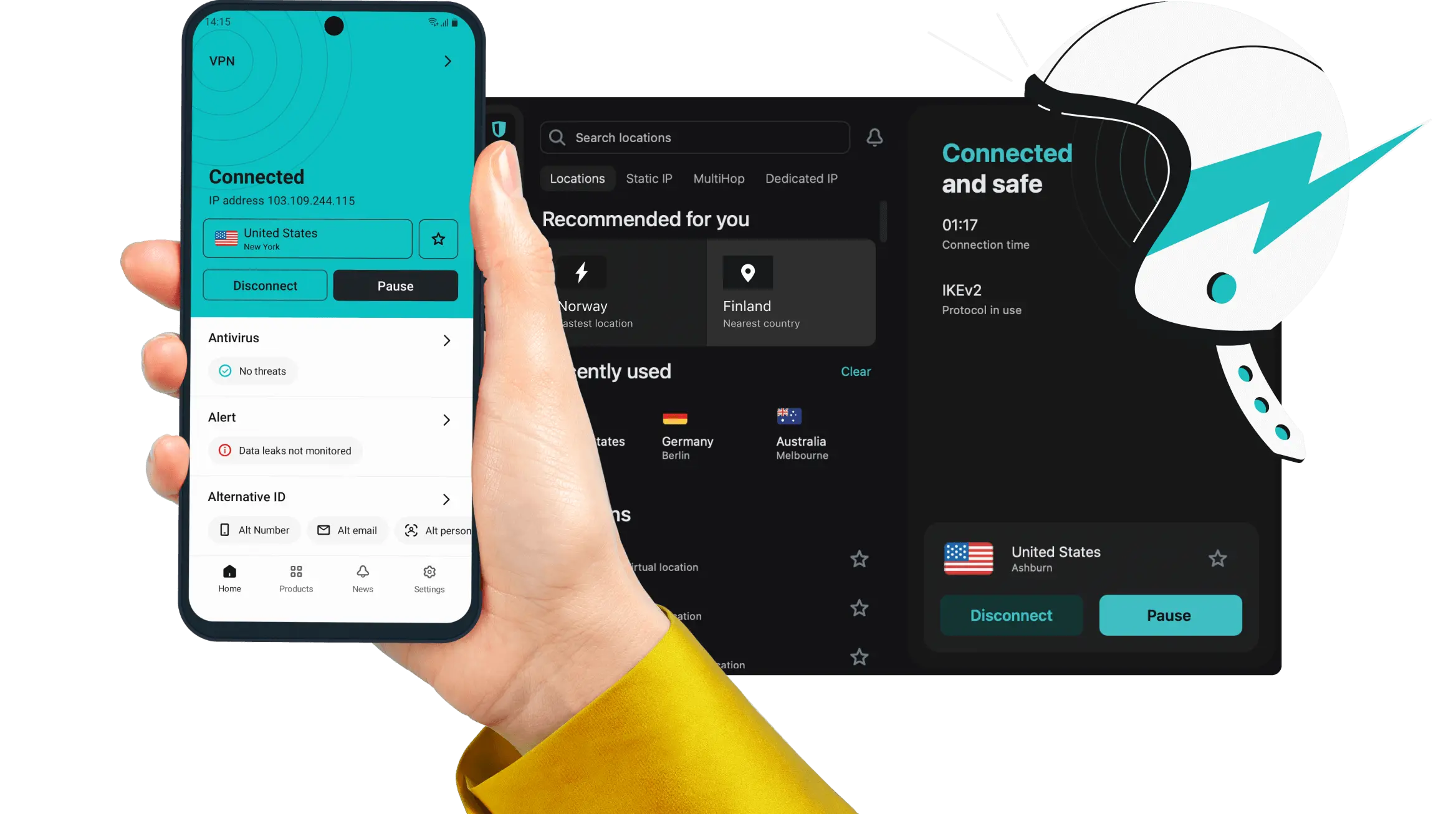
The software covers the full classic VPN feature set and layers a broader privacy stack on top: 4,500+ servers across 100 countries with AES-256 encryption over WireGuard / OpenVPN / IKEv2, Kill Switch, Split Tunneling (Bypasser), MultiHop for double-VPN routing, NoBorders mode for restrictive countries like China or the UAE, CleanWeb for ad and tracker blocking, and native apps for every major platform including Linux, smart TVs and routers. The entire server fleet runs RAM-only — every restart wipes all data.
Surfshark's key features
Unlimited simultaneous devices: one subscription covers laptop, phone, tablet, smart TV, router and every family device. None of the big competitors matches it — NordVPN caps at 10, ExpressVPN at 10–14.
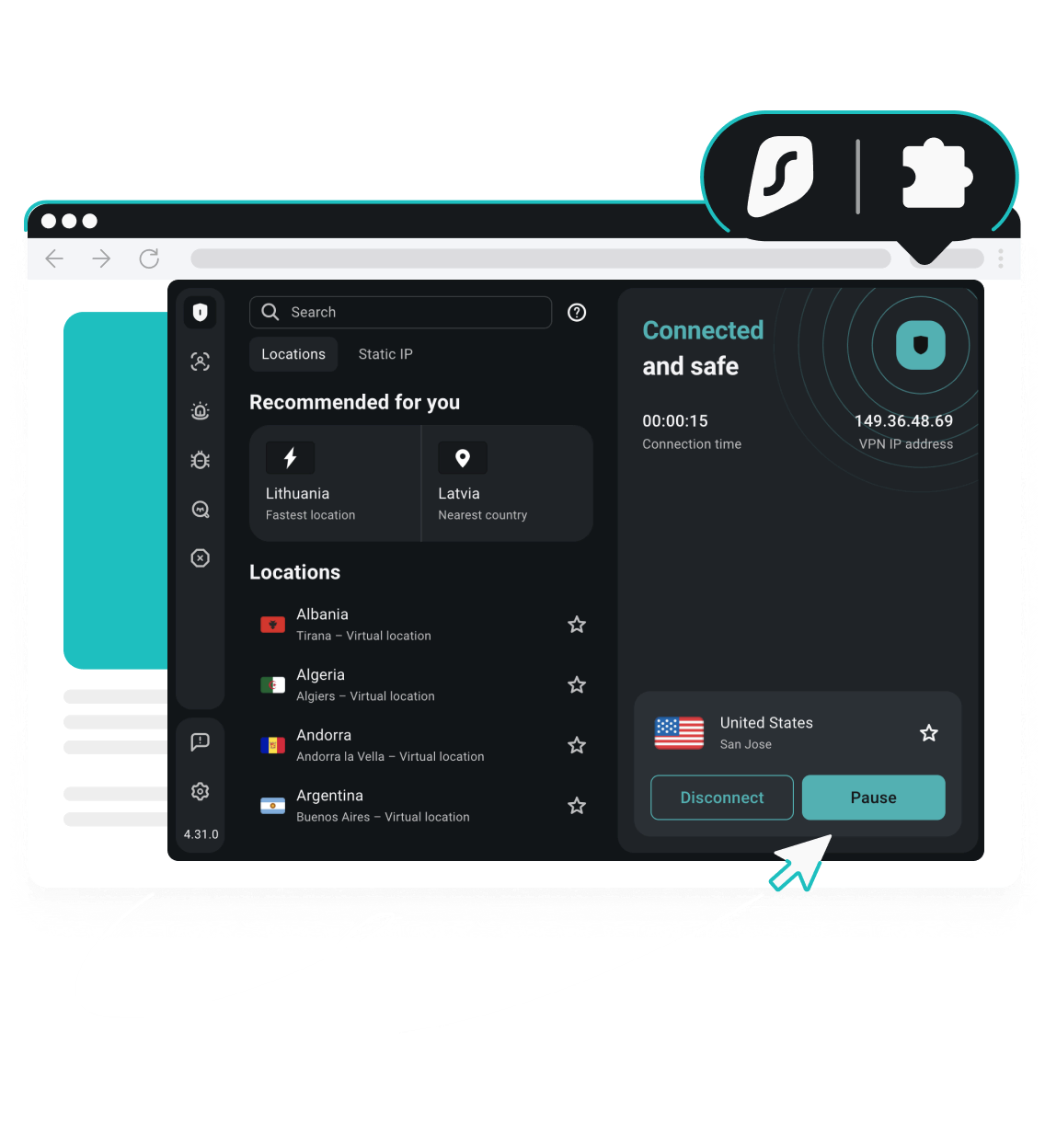
4,500+ servers in 100 countries: one of the widest geographic footprints in the industry. WireGuard is the default protocol for top-end speed.
CleanWeb: blocks ads, trackers, cookie banners and known phishing domains at the DNS level. Saves bandwidth and speeds up page loads.
MultiHop: routes your connection through two VPN servers in two countries (double VPN). Also available as Dynamic MultiHop with freely chosen country pairs.
NoBorders mode: auto-detects restrictive networks and adapts connection behavior — works in China and the UAE according to Surfshark.
Kill Switch: instantly cuts your internet connection if the VPN tunnel drops — prevents IP leaks.
Alternative ID: generates disposable email addresses and pseudonyms for sign-ups — cuts spam and breach exposure.
Antivirus (One plan): real-time protection, scheduled scans, webcam protection. No separate subscription needed.
Incogni (One+ plan): sends automated deletion requests to data brokers and people-search sites. Saves the standalone Incogni subscription cost.
Independently audited no-logs policy: most recent audit by Deloitte in 2025. RAM-only server infrastructure.
Who should use Surfshark?
Freelancers with multiple devices get the most value — one plan protects your work laptop, phone, tablet, personal desktop and family devices. If you're solo and only protecting a single MacBook, NordVPN or ProtonVPN are equally good options; the price gap is small. As soon as your setup grows to 4+ devices (which happens fast in remote/coworking life), Surfshark becomes noticeably cheaper.
Surfshark is also a strong pick for digital nomads and frequent travelers: NoBorders mode works in restrictive countries, and 100-country coverage means you can book domestic-rate tickets, access your home banking and government portals from abroad, and bypass geo-blocking on research tools. For privacy-focused solopreneurs, the One+ plan bundles Incogni, which sold separately costs $7.99 a month on the annual plan — more than the entire One+ subscription; the bundle math works out.
Pros & Cons
Pros
- Unlimited simultaneous devices
- 4,500+ servers across 100 countries
- Independently audited no-logs policy (Deloitte, 2025)
- CleanWeb blocks ads, trackers and malware
- MultiHop and NoBorders work in restrictive countries
Cons
- Lowest pricing requires a 24-month commitment
- Renews yearly at a higher rate
- Monthly plan costs $16.45
Surfshark pricing 2026: what does each plan cost?
The best price requires a two-year commitment, and Surfshark then renews at the higher yearly rate. Booked monthly the same service costs several times more. Budget with the renewal price, not the headline.
The tiers do not differ in VPN performance but in what is bundled around it: ad and cookie-popup blocking at entry, then antivirus, data-leak alerts and alternative identities above. For protection on public Wi-Fi the entry tier is enough. Every plan covers unlimited devices — that is Surfshark's actual argument.
Surfshark free trial: 7 days, 3 devices, card required
Surfshark has no free tier and never has. What it has is a 7-day free trial on the website — for all 12- and 24-month plans, paid by card, PayPal or Apple Pay only once the seven days are up, unless you cancel first. During the trial you can run three devices; after it, as many as you like. On top comes the 30-day money-back guarantee on every plan, which in practice works like a longer trial: subscribe, use it fully, request a refund through support inside 30 days. If you want a genuinely free VPN, Proton VPN's free tier is the only one we would suggest looking at — one device, ten randomly assigned countries, and no data or speed caps according to Proton.
What it costs on shorter terms
The monthly plan costs a multiple of the 27-month rate and the 1-year term sits in between — Surfshark itself calls the 2-year plan its most affordable. The monthly plan costs $16.45 for Starter, $18.95 for One and $21.85 for One+. The catch to plan for: after the 27 months the contract renews yearly at the renewal rate — $79 for Starter, $99 for One, $119 for One+ per year before tax — rather than the intro rate, so put a reminder in your calendar for a few weeks before renewal.
Surfshark vs the alternatives
NordVPN — the premium sibling from the same parent (Nord Security). More servers (8,000+) in 149 countries, the faster NordLynx protocol, marginally more stable in streaming tests — but capped at 10 devices and starts at $3.49/mo, pricier than Surfshark.
ExpressVPN — the classic premium pick with excellent streaming reliability and very stable connections, Basic from $2.99/mo on the 2-year plan is close to Surfshark, but capped at 10–14 devices (depending on plan). Lightway is a strong proprietary protocol.
ProtonVPN — Swiss provider with open-source apps and one of the few legitimate free tiers (1 device, ten randomly assigned countries, no data or speed caps). VPN Plus with Secure Core is the privacy maximalist's pick, but more expensive than Surfshark.
More VPN options — see our full overview of VPN tools for freelancers in 2026.
For the full overview of security tools for freelancers, see our security tools overview.
Pricing
Starter
$2.49
/month, 24-month term +3 free months — $67.23 for 27 months plus tax
- VPN access with 4,500+ servers in 100 countries
- Unlimited simultaneous devices
- CleanWeb (ad and tracker blocker)
One
$2.99
or $2.79 depending on the session (A/B test) — $75.33 to $80.73 for 27 months plus tax
- Everything in Starter
- Antivirus (real-time + scheduled scans)
- Alert (data breach notifications)
One+
$4.49
/month, 24-month term +3 free months — $121.23 for 27 months plus tax
- Everything in One
- Incogni (automated data-broker removal)
- Maximum privacy stack
Prices may change — check the official website for current plans.
Alternatives by use case
- NordVPN If speed and wide coverage decide it
- ExpressVPN If reliability beats price
- CyberGhost If price rules everything
- Proton Mail If encrypting communication matters more than the connection


Frequently Asked Questions
What is Surfshark?
Surfshark is a Netherlands-based VPN provider with 4,500+ servers across 100 countries. The service encrypts your internet connection, masks your IP address, and lets you access geo-blocked content. Its standout feature: unlimited simultaneous device connections on a single subscription — something no direct competitor (NordVPN, ExpressVPN, ProtonVPN) offers. Since the 2022 merger with Nord Security, Surfshark belongs to the same group as NordVPN but continues to ship as a separate product with its own tech stack.
How much does Surfshark cost in 2026?
Three plans, cheapest on the 24-month term with free months on top. Two things to plan for: after the first term Surfshark renews at the higher yearly rate, and booked monthly the same service costs several times more. Every plan covers unlimited devices, with a 30-day money-back guarantee.
How many devices can I use with one Surfshark subscription?
Unlimited. This is Surfshark's biggest differentiator versus NordVPN (10 devices) and ExpressVPN (10–14 devices depending on plan). One subscription covers laptop, desktop, phone, tablet, smart TV, router and every device in your household. For freelancer families and small teams, this is a meaningful cost advantage — a single plan effectively protects multiple people.
Is Surfshark safe and trustworthy?
Yes. Surfshark operates a strict no-logs policy that was most recently independently audited by Deloitte in 2025. The entire server fleet runs RAM-only — every restart wipes all data. Encryption: AES-256-GCM on OpenVPN and IKEv2, ChaCha20 on WireGuard. Plus Kill Switch, MultiHop (double-VPN routing through two countries), and NoBorders mode for restrictive regions. Headquartered in the Netherlands — a Nine Eyes country by Surfshark's own account, which is why the audited no-logs policy, not the location, is the real argument.
Surfshark vs NordVPN — which one should I pick?
Both have belonged to the same parent (Nord Security) since 2022 but target slightly different users. Surfshark is cheaper on the entry tier and offers unlimited devices. NordVPN has more servers (8,000+) in more countries (149 vs 100), the faster NordLynx protocol, and is marginally more stable in streaming tests. For freelancer households with many devices or budget-conscious privacy buyers, Surfshark wins; for pure top-end speed and the largest server fleet, NordVPN does. See our NordVPN review.
Does Surfshark offer a free trial?
Yes — 7 days free on the website, for all 12- and 24-month plans. You add a card, PayPal or Apple Pay, and you are charged only once the seven days are up unless you cancel; during the trial you can use three devices. Every plan also comes with the 30-day money-back guarantee.
Verdict
Surfshark is the strongest pick in 2026 for freelancers and small businesses who want a serious premium VPN at a budget price — the combination of unlimited devices, 100 countries and an independently audited no-logs setup is one none of the big competitors matches. The middle tier is the one to take: a few cents a month more than the entry, with antivirus and data-breach alerts on top, worth it unless your machine already runs its own antivirus. The top tier targets privacy maximalists who would otherwise buy Incogni separately. If you are only protecting one or two devices and want top streaming performance, NordVPN is just as solid. To cover a family, coworking devices and the whole setup, Surfshark is significantly cheaper.