Shopify Review 2026: What the Store Builder Really Costs
Fastlancer Team · Updated: Oct 20, 2026
Short verdict
Ideal for
- Freelancers and small businesses running a serious online store without technical overhead
- Side hustles selling via social media first on the $5 Starter plan
- Freelancers building Shopify stores for clients — an in-demand service
- Merchants who value checkout reliability over maximum customization
Not ideal for
- Anyone avoiding transaction fees on every sale
- Merchants who need deep customisation
- People who want more than three days to try it
- Entry price
- From $2.30 / month
- Free to start?
- Yes — 3-day free trial, followed by a promotional entry price for the first months
- Stands out for
- The complete store from one provider — hosting, checkout, payments and inventory, without ever touching a server
What is Shopify?
Shopify is the world's leading hosted store platform: you get the store, hosting, SSL, checkout, payment processing and inventory management as one package — without ever touching a server, an update or a security patch. That "it just works" is the product: while self-hosted stores demand technical upkeep, Shopify handles everything except your products.
For freelancers Shopify matters twice: as the platform for your own store or side business — and as a service, since Shopify setups for clients are an in-demand freelance niche.
The true cost: plan + fees
The monthly fee is only half the bill. On top come transaction fees on every sale — lower on the higher plans, and noticeably higher again if you use an external payment provider instead of Shopify's own. On a growing store those percentages can exceed the subscription itself, which is the calculation most comparisons leave out.
The cheapest plan is a special case: a simple store with product pages and checkout plus social and link-in-bio selling, at a much higher percentage — exactly right for testing social selling, wrong for volume.
What you get for it
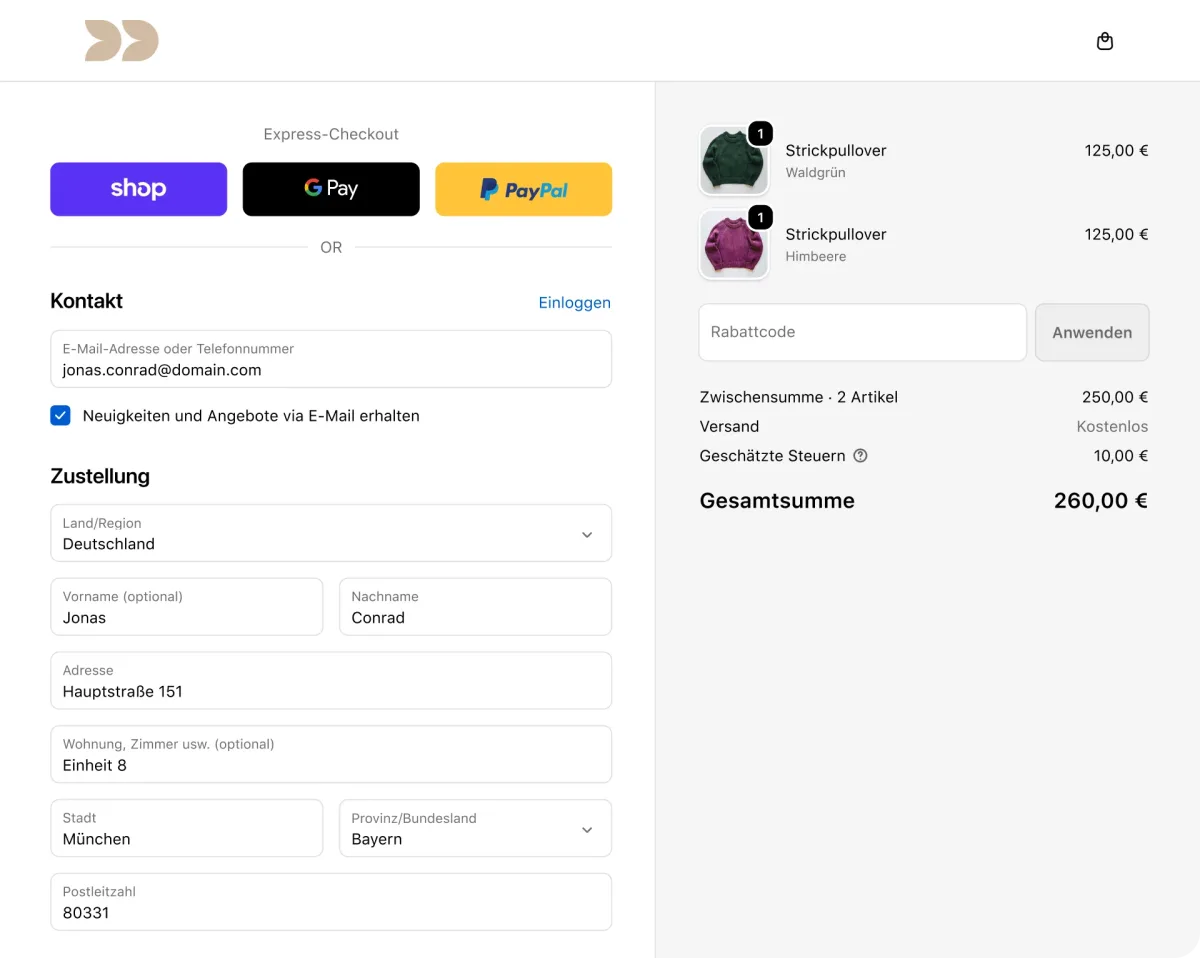
The editor builds handsome stores without code, the theme ecosystem covers every industry, and the app store extends everything from reviews to email marketing to dropshipping. The heart is the checkout — the most conversion-optimized in the industry, with every relevant payment method — Klarna and Apple Pay run through Shopify Payments, PayPal as a separate gateway without extra fees. Add inventory management, shipping integrations, tax settings for cross-border selling and solid reports even on Basic. Since 2026 the package also includes Sidekick, Shopify's AI assistant for store data and routine tasks, and the Shop app — which Shopify says reaches over 250 million shoppers — plus 24/7 chat and email support.
Shopify vs. WooCommerce & co.
The honest comparison: WooCommerce (WordPress) is cheaper and more flexible if you have the technical skills — no platform transaction fees, full control, but hosting, updates and security are on you. Wix and Squarespace suffice for occasional sales next to a portfolio site. Shopify wins once the store is the business: more checkout conversion, more headroom, less operational risk. Paired with Klaviyo for email marketing, it's the de-facto e-commerce stack.
Who is Shopify worth it for?
Shopify fits when selling is your business or a serious pillar of it, and you value operational reliability over tinkering freedom. Side hustles start cheap on Starter or Basic; growing merchants move to Grow once staff accounts and lower fees close the gap. If you only sell occasionally, or want maximum control at minimum cost, simpler builders or WooCommerce serve you better.
What we like about Shopify and what we don't
Pros
- Complete store with zero technical overhead
- Most reliable checkout in the industry
- Huge app and theme ecosystem
- $5 Starter plan for social selling
- Scales from side hustle to eight-figure revenue
Cons
- Transaction fees on every sale
- Costs stack up with apps, themes
- Less customization than self-hosted WooCommerce
Pricing
Starter
$5
per month — selling via social media & link-in-bio
- Simple store: product pages + checkout
- 5% transaction fee with Shopify Payments
- Great for testing social selling
Basic
$39
per month · $29/month billed yearly
- Full online store with hosting and SSL
- Shopify Payments: 2.9% + 30¢ per online sale
- External payment providers: +2% fee
Grow
$105
per month · $89/month billed yearly — for teams
- Up to 5 staff accounts
- Professional reports
- Shopify Payments: 2.7% + 30¢
Advanced
$399
per month · $359/month billed yearly — for volume
- Up to 15 staff accounts
- Custom reports and analytics
- Shopify Payments: 2.5% + 30¢
Plus
from $2,300
per month — for large merchants, not a solo plan
- Unlimited staff accounts
- B2B features and up to 20 locations
- Shopify Payments: 2.25% + 30¢
Prices may change — check the official website for current plans.
Price history
Checked Oct 20, 2026 · 9 changes since Sep 17, 2026
- Oct 20, 2026Basic from $29 to $39 (+34%)
- Oct 20, 2026Grow from $89 to $105 (+18%)
- Oct 20, 2026Advanced from $359 to $399 (+11%)
- Oct 15, 2026Grow from $79 to $89 (+13%)
- Oct 15, 2026Advanced from $299 to $359 (+20%)
- Sep 22, 2026Basic from $39 to $29 (−26%)
Alternatives by use case


Frequently Asked Questions
How much does Shopify really cost?
The monthly fee is only half the bill. Transaction fees land on every sale and rise noticeably if you use an external payment provider instead of Shopify's own. On a growing store those percentages can exceed the subscription itself. Annual billing cuts the subscription part by about 25 %.
Is there a free Shopify plan?
No — only a 3-day free trial, usually followed by a promotional entry price for the first months. The cheapest permanent entry is the $5 Starter plan, which includes only a simple store (product pages + checkout) rather than the full store builder.
Which Shopify plan fits freelancers and small businesses?
For most solo merchants, Basic ($39/month) is the right start: a full store with all core features. Starter ($5) makes sense for testing social selling with a simple mini-store. Grow and Advanced pay off with a team and higher volume, once the lower transaction fees offset the higher monthly price.
Shopify or WooCommerce — which is better?
Shopify is the all-inclusive option: hosting, security, updates and support from one provider, in exchange for monthly fees plus a cut of sales. WooCommerce (WordPress) is free and maximally flexible, but demands your own hosting, maintenance and technical skill. Rule of thumb: selling should just work = Shopify; maximum control and minimal running costs with technical skills = WooCommerce.
What extra running costs should I budget for?
Beyond plan and transaction fees, typical extras add up: paid apps (often $10–50/month for reviews, email, upsells), a premium theme (one-time ~$150–350) and your domain. A serious Basic store realistically lands at $60–120/month all-in — still cheaper than agency operations, but more than the bare plan fee.
Verdict
Shopify remains the standard for anyone who wants to sell instead of managing servers: the checkout is the most reliable on the market, the ecosystem is enormous, and everything scales from $5 social selling to enterprise on one platform. The price is ongoing fees on every sale — calculate the true total cost and you'll rarely be disappointed. Technical merchants on tight budgets do better with WooCommerce; everyone else sleeps better with Shopify.