Udemy Review 2026: Is It Worth It? Pricing, Quality & Honest Test
Tim Wittke · Updated: Aug 17, 2026
Short verdict
Ideal for
- Anyone learning a specific tool or skill on purpose
- Freelancers who buy single courses instead of paying for a subscription
- Learners who want to choose by topic rather than by provider
Not ideal for
- Anyone who needs a recognised certificate for job applications
- Learners expecting a curated path
- Entry price
- Free plan · paid from €10 / month
- Free to start?
- No subscription needed — single courses with a refund window
- Stands out for
- The largest course selection in tech and business, bought one at a time
Pros & Cons
Pros
- Largest course selection across tech, business, creative
- One-time payment per course
- Regular sales with courses from $10–15
- Lifetime access after purchase
Cons
- Inconsistent quality, many outdated courses
- No curated learning path system like Coursera
- Certificates less recognized than university credentials
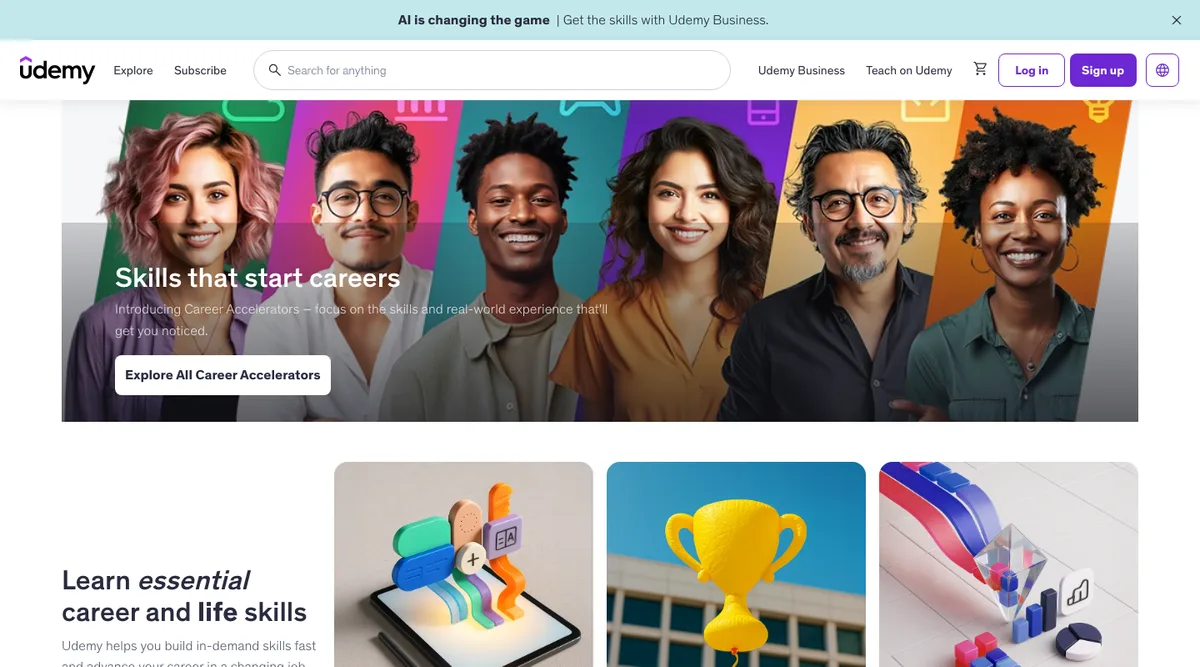
Udemy is one of the world's largest e-learning platforms, offering over 250,000 online courses, serving more than 80 million learners, and working with thousands of instructors. Founded in 2010 in San Francisco, Udemy focuses on practical, career-oriented education – especially in fields like technology, business, marketing, and lifestyle.
What Is Udemy?
Unlike traditional university-based platforms, virtually anyone can become an instructor on Udemy. This leads to massive content variety – but also varying quality levels.
Most courses consist of YouTube-style video lessons, complemented by exercises, downloadable materials, and optional certificates.
How Freelancers & Small Businesses Can Use Udemy
For Freelancers:
On-Demand Skill Upgrades
Web design, programming, SEO, copywriting, data science – Udemy is perfect for targeted skill development to expand or improve your service offering.
Soft Skills & Tools
Communication, time management, Notion, Trello, ChatGPT – everything is available on demand.
Specialization & Positioning
If you want to stand out from competitors, you'll find niche courses like “UX Writing,” “Freelance Branding,” or “LinkedIn Lead Generation.”
For Small Businesses & Teams:
Team Training with Udemy Business
A curated version of Udemy with 30,000+ courses (Enterprise) for companies. Major brands like Adidas and Pinterest use it.
Scalable Onboarding
New team members can be onboarded quickly through relevant Udemy courses.
Employee Retention
Professional development is a strong benefit – especially in digital industries.
What Else Does Udemy Offer?
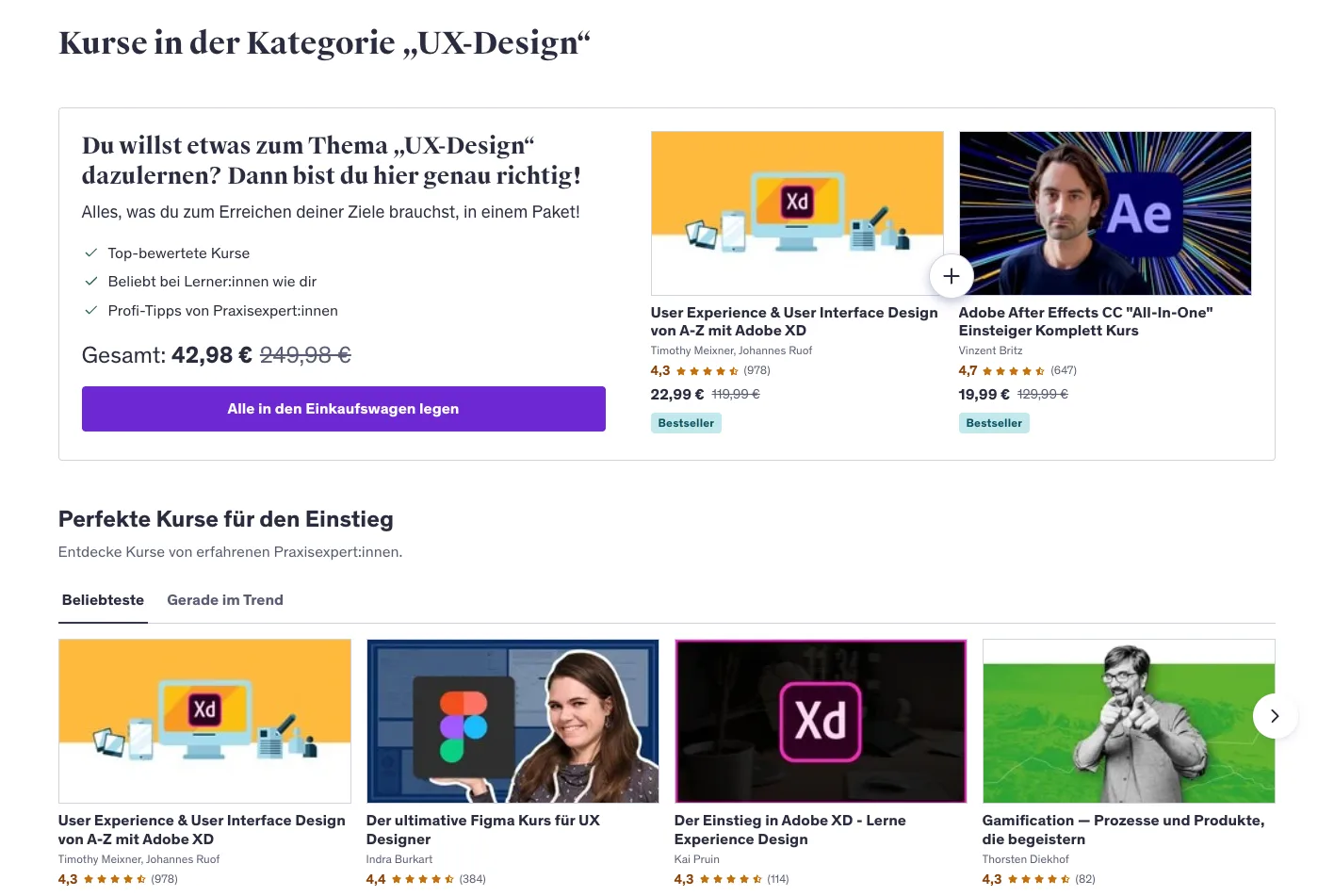
Lifetime Access: Once purchased, courses remain accessible – no subscription required (except Udemy Business).
Rating System & Preview Videos: User reviews and previews help you choose wisely.
Transcripts & Subtitles: Ideal for focused learning or language barriers.
Offline Access via App: Download courses for travel or commuting.
Customizable Video Player: Adjust speed, take notes, skip sections.


What We Like – and What We Don't
What We Like:
Massive course selection across nearly every topic
Affordable pricing thanks to frequent discounts (often €10–20)
Clean, intuitive platform
30-day money-back guarantee
Courses available in multiple languages
What We Don't Like:
Quality varies significantly between instructors
Confusing pricing structure due to constant discounts
Certificates have no official academic recognition
Is Udemy Affordable for Freelancers?
Tip: Prices may vary slightly between browser and app. If you see a good deal, grab it.
For companies, Udemy Business offers fixed monthly per-user pricing (depending on the plan).
There is also a Personal Plan subscription at roughly €20/month on the annual plan (about €240/year). It covers a curated selection of around 26,000 top courses — not the full 250,000-course catalog. For most freelancers, buying individual courses during sales works out cheaper, and purchased courses stay yours for life even without a subscription. Also worth knowing: each course has a Q&A section with the instructor, though answer quality varies noticeably from instructor to instructor.
Note: Prices may change. Please check the official website for current details.
When are Udemy courses actually cheap?
Almost always. Udemy runs sales more or less continuously, with courses at $10–20 instead of a $100–200 list price. Paying the list price means you clicked at the wrong moment — and the windows without a sale are rare.
That produces a quirk which confuses most first-time buyers: the price you see is not only a property of the course. Udemy varies pricing by region, language, device and session, so the same course can cost something different logged in than it does in a private window.
Don't buy immediately if a course shows $120. Wait a few days — the next sale is reliable.
Treat the countdown as sales mechanics. When one sale ends, another usually follows on similar terms.
Wishlist instead of buying at full price. Udemy notifies you when saved courses go on sale.
The biggest discount waves land around New Year, the start of summer and November (Black Friday). Plan course purchases loosely around those if you are not in a hurry; in an ordinary sale week you will pay barely more.
The real cost is elsewhere: at $10–20 a course, the risk is not the price but the pile of courses you never open. The 30-day refund covers a bad purchase — it does not answer whether you will actually work through it.
Does Udemy have a free trial?
Not for individual courses — but something better. Courses are one-time purchases with no trial period. Instead, every purchase carries a 30-day money-back guarantee: watch the course, and if it does not deliver, request a refund. In practice that is more generous than a trial, because you see the whole thing rather than a sample.
Two things are free regardless: many courses offer preview lessons, which matter more on Udemy than on curated platforms because instructor quality varies so widely, and there is a set of fully free courses, usually shorter introductions.
The Personal Plan subscription has its own free trial. That only pays off if you learn continuously — for one or two courses a year, buying individually in a sale is far cheaper.
Final Verdict: Is Udemy Worth It?
Yes – with some caveats.
If you search strategically and check instructor reputation, reviews, preview content, and update dates, Udemy offers excellent value for money. Freelancers + Founders benefit enormously from affordable skill upgrades without long-term commitments.
Important: Never buy blindly. Always review ratings, content outlines, and course updates.
Hard facts:
No subscription trap (unless you choose Udemy Business)
Flexible & start anytime
Covers both professional and hobby topics
Large community with Q&A sections and external discussions
Alternatives to Udemy
Coursera – Academic courses with certificates (often free to audit, certificates $30–99)
edX – University-level courses, free + paid certificates
LinkedIn Learning – Business & soft skills (subscription model)
Skillshare – Creative & soft skills (subscription model)
Udacity – IT, Data Science, AI (Nanodegrees, premium pricing)
Pluralsight – Developer & IT specialization (subscription model)
Mindvalley – personal growth and performance programs for ambitious freelancers and entrepreneurs
Udemy Black Friday 2026: what to expect
On courses, Black Friday barely moves the needle — the discount level holds most of the year. The one line item where November genuinely mattered is the subscription.
| Year | What was offered | Window |
|---|---|---|
| 2024 | Courses up to 85% with a code; Personal Plan 55% | courses 22 to 29 November and 1 to 2 December, subscription to 6 December |
| 2025 | Courses 30 to 85% | to 28 November |
| Rest of the year | Courses up to 80 to 85% in almost any sale week, and up to 85% again at New Year | ongoing |
Udemy's own Black Friday page names no percentage, no price and no end date — checked mid-campaign in 2025. It is an evergreen landing page and is still up today. The figures above therefore come from Class Central, not from the vendor.
One detail the coupon sites leave out: in 2024 the sale was not valid everywhere. France and Japan were excluded, alongside several sanctioned countries.
And a mix-up that keeps circulating: the subscription code going around as BLACKFRIDAY55 belongs to Udacity, not Udemy.
Pricing
Single course
$10–15
during the running promotions, list price $100–200
- Lifetime access
- No subscription needed
- 30-day money-back guarantee
Personal Plan
$20
per month billed annually
- Access to ~26,000 curated courses
- No individual purchases
- Cancel after the term
Udemy Business
On request
team plan from $360 per user a year
- 30,000+ curated courses
- Central administration
- Learning paths for teams
Prices may change — check the official website for current plans.
Alternatives by use case
- Coursera If a recognised certificate is needed
- Skillshare If creative skills on a subscription fit better
- Domestika If a portfolio project should be the outcome
- Blinkist If an overview is enough


Frequently Asked Questions
When are Udemy courses cheapest? How do I find the discounts?
Almost always — Udemy runs near-continuous sales with courses at $10–20 instead of a $100–200 list price. Paying list price means you clicked at the wrong moment; sale-free windows are rare. Two quirks are worth knowing: Udemy varies pricing by region, language, device and session, so the same course can cost something different logged in than in a private window; and the countdown timer is sales mechanics — when one sale ends, another usually follows on similar terms. The practical move: wishlist courses instead of buying at full price, and Udemy will notify you when they go on sale. The biggest discount waves land around New Year, the start of summer and November (Black Friday).
Does Udemy have a free trial?
Not for individual courses — those are one-time purchases with no trial period. Instead every purchase carries a 30-day money-back guarantee, which in practice is more generous than a trial because you see the entire course rather than a sample. Free regardless: the preview lessons most courses offer (worth using on Udemy, where instructor quality varies widely) and a set of fully free courses. The Personal Plan subscription has its own free trial, but that only pays off with continuous use — for one or two courses a year, buying individually in a sale is far cheaper.
How much do Udemy courses cost?
Most Udemy courses sell for €10–20 during sales, while regular list prices often range from €100–200. Discounts are so frequent that you should rarely pay full price. Once purchased, courses stay yours for life — no subscription required.
How often does Udemy have sales?
Discounts are frequent — courses regularly drop to €10–20. Prices may even vary slightly between browser and app, so if you see a good deal, grab it. Always check ratings, content outlines, and update dates before buying.
What is the Udemy Personal Plan and is it worth it?
The Personal Plan is a subscription at roughly €20/month on the annual plan (about €240/year) covering a curated selection of around 26,000 top courses — not the full 250,000-course catalog. For most freelancers, buying individual courses during sales works out cheaper, and purchased courses remain accessible for life.
Does Udemy offer refunds?
Yes — Udemy has a 30-day money-back guarantee on course purchases, so you can request a refund if a course does not meet your expectations.
Is it worth waiting for Udemy Black Friday?
Not for individual courses. The discount level Udemy advertises at Black Friday is on offer in almost every sale week of the year — at New Year just the same, and again a week after Cyber Monday. If you need a course, buy it in the next ordinary sale and you will pay barely more. The Personal Plan subscription is the exception: in 2024 it carried its own, considerably deeper November discount that did not exist outside the season. So there is a reason to wait for the subscription, and none for a single course.