Multiple Income Streams for Freelancers: 8 That Work
Fastlancer Team · Updated: Oct 2, 2026

As a freelancer, relying on a single income source is risky. Client work fluctuates, projects end without warning, and income is rarely predictable. Building several income streams — especially recurring and passive ones — is one of the most important steps toward long-term stability.
You don't want to trade time for money forever. But which stream actually pays off? The common mistake isn't picking the wrong one — it's picking three at once. Start affiliate content, a digital product and a course in the same month and you'll have three half-finished projects by summer. None of these streams pays off in its first month. One of them, built consistently, gradually decouples your revenue from your calendar.
This guide covers eight streams and sorts them by the thing that actually decides: what you already have. An audience, a provable result, a back catalogue of creative work — each points somewhere different. Plus the two platform cost models, five real starting positions, and the points where this falls apart in practice.
Jump to: Quick verdict · Which stream fits you? · All eight streams · What the platforms take · Five starting positions · Where it falls apart
The short version
Quick verdict: where to start
Four starting positions cover most freelancers. Find yours and read on from there.
| Your situation | Start with | Why | Watch out for |
|---|---|---|---|
| Client work, unpredictable months | Retainers | No new product, no new audience — you're repackaging work clients already buy | Still active income: it stops when you stop |
| No audience yet | Licensing or a small digital product | The marketplace brings the buyers, so you don't need your own | The marketplace keeps a cut, and you compete with everyone else on it |
| Audience in place | Affiliate marketing | No product to build — the shortest path from start to first payout | Without readers or viewers nobody clicks, however good the commission |
| A result you can prove | Online course or membership | Highest return per hour invested | Weeks of lead time and a monthly platform bill before anyone enrols |
Which stream fits you?
Three questions. Answer them honestly — the first already rules out half the list.
Do you have an audience? A blog with returning readers, a newsletter, a YouTube channel, a social account you actually post to.
Yes → affiliate marketing or a membership. No → licensing or a digital product on a marketplace.Can you prove a result? Not "I know this field" — cases, references, numbers someone can check.
Yes → an online course. No → a small digital product that removes one specific chore.Do you have a back catalogue of creative work? Photos, illustrations, music, templates that already exist.
Yes → licensing, the shortest path from existing work to income. No → affiliate or a course.
For most freelancers this lands on two answers: affiliate if you have an audience, a small digital product if you don't — with retainers running underneath as the base. Courses, memberships, YouTube and micro-SaaS are the step after that, not the entry point.
All eight streams
Lead time is what separates these, not ceiling. This table answers what to start with; the sections below go through each one.
| Stream | What you need first | Lead time | Type |
|---|---|---|---|
| Client work | A skill someone pays for | Days | Active |
| Retainers | Existing clients | Days | Recurring, active |
| Affiliate marketing | An audience with a clear niche | Days | Passive |
| Digital products | One topic you know cold | 1–4 weeks | Passive |
| Online courses | A result you can prove | 4–12 weeks | Semi-passive |
| Memberships | An existing community | Weeks | Recurring, passive |
| Licensing | A back catalogue of creative work | Days | Passive |
| Micro-SaaS | Product or technical skills | Months | Recurring, passive |
If you have no audience, don't start at the affiliate row — start at licensing or digital products. Both work without a following, because the marketplace supplies the buyers.
Why Freelancers Should Diversify Their Income
Many freelancers start with one primary source of income: selling their time. While this works well in the beginning, it quickly becomes a bottleneck. Your income is directly tied to your availability, health, and capacity.
Diversifying income streams helps you:
Reduce financial risk
Smooth out income fluctuations
Build long-term financial stability
Scale beyond billable hours
Gain more freedom and flexibility
The goal isn't to replace client work overnight, but to gradually add additional revenue streams that compound over time.

Idea 1: Client Work (Active Income)
Client projects are the foundation for most freelancers. This includes services like design, development, consulting, writing, marketing, or UX/UI work. You exchange time and expertise for money — usually on an hourly, daily, or project basis.
Advantages:
Immediate income
Predictable cash flow
Direct client relationships
Disadvantages:
Income stops when you stop working
Limited scalability
High dependency on availability
Client work is ideal as a base income, but rarely sustainable as the only long-term strategy.
Idea 2: Retainers & Subscriptions (Recurring Active Income)
Retainers are one of the most effective ways to stabilize freelance income. Instead of one-off projects, clients pay a fixed monthly fee for ongoing services such as maintenance, consulting, design support, or marketing.
Examples:
Monthly design or development retainers
Ongoing SEO or content support
UX consulting subscriptions
Website maintenance packages
This model combines active work with predictable, recurring revenue — a powerful step toward financial stability.
Idea 3: Affiliate Marketing (Passive Income)
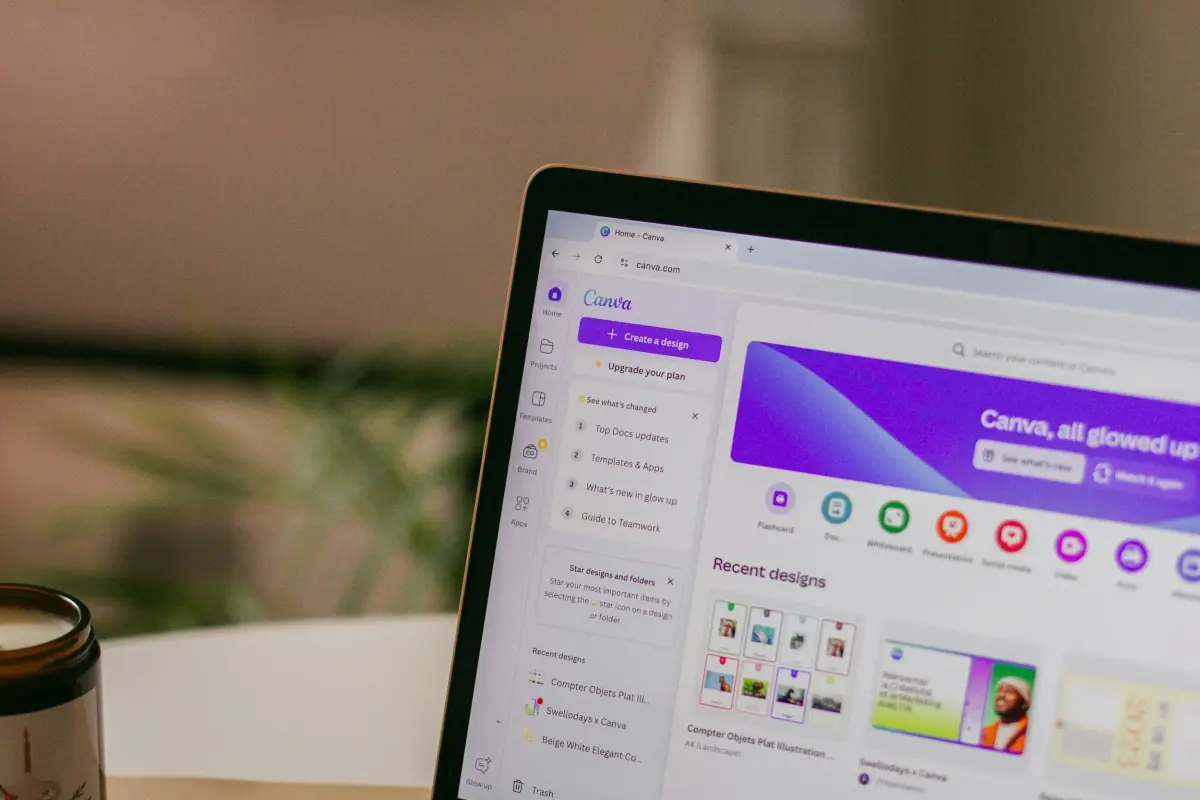
Affiliate marketing allows freelancers to earn commissions by recommending tools, software, or services they already use and trust. When someone purchases through your referral link, you earn a percentage of the sale.
Common affiliate income sources:
Software tools (SaaS)
Hosting providers
Design, productivity or finance tools
Online platforms and services
Popular affiliate platforms:
Affiliate income scales well, especially when combined with blogs, newsletters, YouTube channels, or comparison articles. Once content ranks or gets traffic, it can generate income for years.
Idea 4: Digital Products (Highly Scalable Passive Income)
Digital products are one of the most attractive income streams for freelancers. You create something once and sell it repeatedly with minimal additional effort.
Examples of digital products:
E-books and guides
Design systems and UI kits
Checklists and tool collections
Scripts, presets, or automation files
Popular platforms:
Shopify (digital downloads)
Amazon KDP (for books and guides)
Digital products work especially well when they solve a specific problem for a clear target audience.
The physical sibling of this model is print-on-demand: the same create-once logic, except a supplier prints and ships each order, so you never hold stock. Tapstitch focuses on apparel — 100+ premium garments in heavyweight fabrics, DTG and DTF printing, custom labels — with no subscription: you pay per order. That pricing is what makes it a low-risk experiment rather than a business you have to commit to. If a design doesn't sell, it cost you the design time and nothing else. Realistically it's a slow-burn stream, not a shortcut — but it is the natural next step if you already have an audience that would wear your work.
Idea 5: Online Courses & Workshops (Semi-Passive Income)
Online courses allow freelancers to package their expertise into structured learning formats. While initial production takes time, courses can generate recurring income over long periods.
Formats include:
Self-paced video courses
Live or recorded workshops
Cohort-based courses
Masterclasses
Popular platforms:
Kartra — if you want the course, the sales page, the checkout, the email sequence and the affiliate programme in one login instead of five subscriptions (price in the cost table)
and of course YouTube
Courses work best when you already have an audience or proven expertise in a niche. The production side is lighter than it used to be, too — browser-based editors like FlexClip handle trimming, subtitles and screen recording without a full editing suite.
Idea 6: Memberships & Paid Communities (Recurring Passive Income)
Membership models offer recurring revenue through exclusive access to content, tools, or communities. Members pay monthly or yearly fees.
Examples:
Paid Slack or Discord communities
Exclusive content libraries
Tool collections or databases
Mentorship or office-hour access
This model benefits from strong community engagement and trust, but can be highly sustainable once established.
Idea 7: Licensing, Royalties & Usage Rights (Passive Income)
Freelancers can earn recurring income by licensing their work rather than selling it outright.
Examples
Stock illustrations, photos or videos
Fonts, icons or typefaces
Music, sound effects or motion assets
Design assets sold under license
Popular platforms:
Royalties may start small, but can accumulate significantly over time.
Idea 8: SaaS & No-Code Products (Advanced Passive Income)
Some freelancers build small software tools or no-code solutions that solve niche problems. While more complex, SaaS products can generate highly scalable recurring revenue.
Examples:
Micro-SaaS tools
Automation services
Internal tools turned into products
Platforms and tools:
This path requires technical or product skills, but offers long-term leverage.
What the platforms take
This is where it's decided whether anything is left of your sale — and the platforms bill in two fundamentally different ways. One keeps a share of each sale and costs nothing while you're idle. The other charges a flat monthly fee and leaves every further sale entirely to you.
| Platform | For | Billing | Cost |
|---|---|---|---|
 Gumroad Gumroad | Digital products | Share per sale | 10% + $0.50 on your own links, 30% via its marketplace |
 Lemon Squeezy Lemon Squeezy | Digital products | Share per sale | 5% + $0.50 |
 Shopify Shopify | Your own store | Flat monthly | from $29 |
 Podia Podia | Courses & digital products | Flat monthly | from $42 billed annually |
 Kartra Kartra | Course, checkout, email in one | Flat monthly | from $52 billed annually |
One piece of arithmetic from that table makes the decision for you: a 10% share costs exactly as much as a $29 flat fee once you sell around $290 a month. Below that the percentage model is cheaper; above it the subscription is, and more so with every extra sale. Start on the percentage model and switch when the numbers demand it — not before. A subscription idling for three months is the most avoidable line item of any launch.
Two things no pricing page tells you. Gumroad and Lemon Squeezy act as merchant of record, which means they handle sales tax on your international sales — run your own store and that obligation stays with you. And on course platforms the entry price matters less than what scales with success: check whether the plan caps members, storage or courses, because only one of those grows with your business.
How to Choose the Right Income Streams
Not every income stream fits every freelancer. Choose based on:
Your skills and expertise
Available time and resources
Risk tolerance
Long-term goals
A common strategy:
Start with client work → add retainers → introduce affiliate income → build digital products → expand into courses or memberships.

Five starting positions — and the first move in each
The streams above are abstract. Five situations freelancers actually start from, and what the first action is in each.
1. You have clients but no audience
Typical for developers and designers: work arrives through referrals, there is no blog and no newsletter. Start with retainers, then licensing or a small digital product. Retainers need nothing new from you; licensing and marketplace products need no audience, because the marketplace brings one. First action: upload ten to twenty pieces that already exist — not a hundred new ones. Affiliate is the wrong call here, because nobody is there to click.
2. You already publish
A blog with returning readers, a newsletter, a channel. Affiliate marketing is your shortest path. First action: pull up your three most-read pieces and check which tools in them run a partner programme. Reworking existing content beats publishing something new — the readers are already there.
3. You can prove a result
Cases, references, numbers on one topic. A course returns the most per hour invested — and has the longest lead time plus a running bill before the first enrolment. So the first action isn't recording, it's selling: announce the course before you produce it. Too few sign-ups and you've saved yourself two months of production.
4. You have a community but no product
People who reply, share and ask you things. A membership fits better than a one-off product, because it mirrors the relationship that already exists. First action: pick a delivery rhythm you can hold in your worst month. A missed delivery costs more trust here than an offer you never launched.
5. You're starting from zero
No audience, no provable result, no back catalogue. Then the honest answer is: none of these streams is your next step. Paying clients come first — they supply the topic, the proof and the reach that everything else grows out of. Our guides on finding clients and starting without experience cover that ground.
Where it falls apart — and how to avoid it
Four points where most attempts stall. None of them is a question of which platform you picked.
Three streams at once
The most common and most expensive mistake. Every stream needs upfront work before anything comes back; three in parallel means three lots of upfront work and no return. How to avoid it: commit to one and set a date to review it — review, not abandon. Before that date, every number is noise.
The subscription before the first sale
Booking a course platform before the course exists feels like progress and is a running bill. How to avoid it: start on a platform that takes a share per sale and switch only when the arithmetic in the cost table tips for you.
Affiliate without an audience
Affiliate looks like the easiest entry because there's no product to build. Without readers or viewers it stays at zero anyway, however good the commission. How to avoid it: check first whether anyone actually reads you. If not, reach is your real project — and a marketplace product is what sells in the meantime.
A product nobody asked for
The bigger the planned product, the more likely it gets built past the demand. How to avoid it: take the chore clients have already asked you about twice and make it the smallest possible product. One template sold tells you more about the market than any survey.
Conclusion: Build Income That Works for You
Diversifying income streams is one of the smartest decisions freelancers can make. While client work provides immediate cash flow, passive and recurring income sources create stability, scalability, and freedom over time.
You don't need to implement everything at once. Start small, test what works, and build step by step. Over time, multiple income streams can turn freelancing from a fragile setup into a resilient business.
Frequently Asked Questions
What are the best passive income streams for freelancers?
The most accessible options are affiliate marketing, digital products (templates, e-books, design systems), online courses, memberships and paid communities, and licensing your work on stock platforms. More advanced freelancers can build micro-SaaS or no-code products for highly scalable recurring revenue.
How long does it take to earn passive income as a freelancer?
It requires real upfront work — courses, products and content all take time to produce before they earn anything. The payoff is longevity: once an article ranks or gets steady traffic, affiliate content can generate income for years, and royalties may start small but accumulate significantly over time.
Can passive income replace client work?
Not overnight — and that should not be the goal. The proven strategy is to gradually add revenue streams that compound: start with client work, add retainers, introduce affiliate income, then build digital products and expand into courses or memberships.
What does it cost to start a passive income stream?
Less about the stream than about how the platform bills. There are two models: one keeps a share of each sale and costs nothing while you're idle, the other charges a flat monthly fee and leaves every further sale to you. For a launch the share model is almost always cheaper — switching pays off only once the share exceeds the flat fee. Affiliate marketing and licensing need no platform fee at all: there you pay with reach instead of money.
How long before a passive income stream earns anything?
Longer than most promises claim, and this is what separates the streams most clearly. Affiliate links and licensed work can earn within days, because nothing has to be produced. A digital product takes weeks, a course months, a YouTube channel longest of all. None of them pays off in its first month. Plan for that and you last; bet on quick returns and you quit inside exactly the window where nothing could have come back yet.
Which income stream should I start with?
Choose based on your skills, available time, risk tolerance and long-term goals. Retainers are the fastest way to stabilize income since they build directly on existing client relationships, while affiliate marketing and digital products are the most common first steps toward truly passive revenue.