Similarweb Review 2026: Estimate and Compare Competitor Traffic
Fastlancer Team · Updated: Nov 18, 2026
Short verdict
See where your competitors' visitors come from
- Agencies that want to show a prospect's traffic and channels next to its competitors before a pitch
- Marketing teams tracking market share and category trends month over month
- Founders checking which channels bring competitors their customers before entering a market
- Solo freelancers on a tight budget who mainly want to improve their own Google rankings
- Anyone comparing small niche sites with a few thousand visits a month
What Similarweb tells you
Your analytics only shows your own website. How many visitors a competitor gets, whether their traffic is growing and which channels bring them customers is invisible there. Similarweb fills that gap: enter a domain and you get estimated visits, time on site, top countries, device split and the main traffic sources.
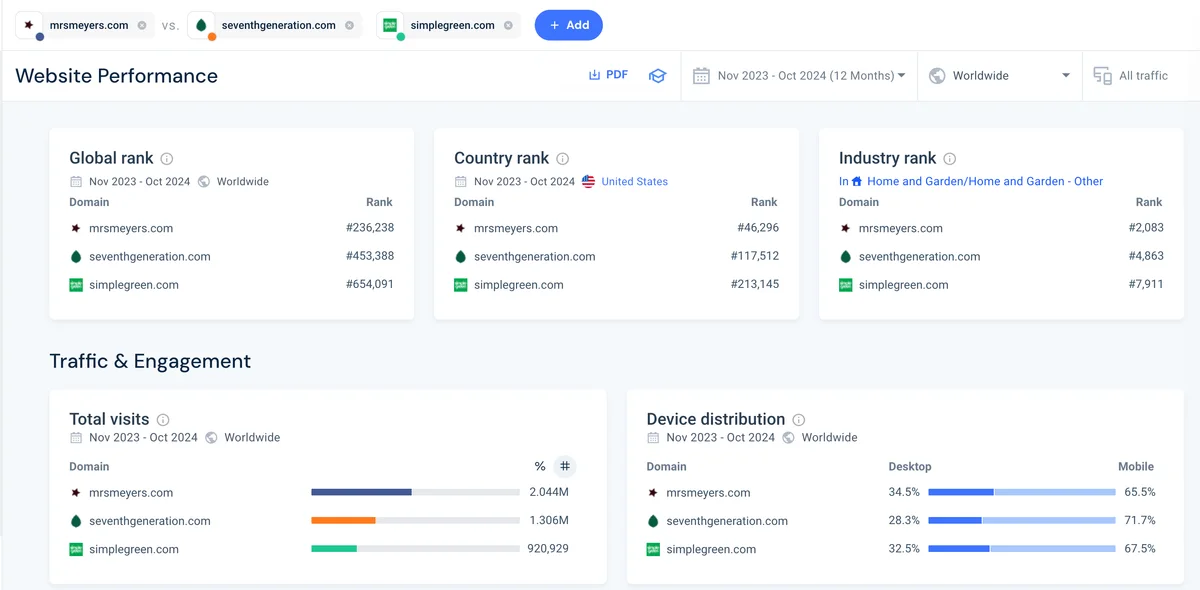
The real value is in the comparison. Put several sites next to each other and see who leads in which country and how the balance shifts over the months. Agencies use it before a pitch, marketing teams to watch their category, founders before launching an offer.
Where your competitors' visitors come from
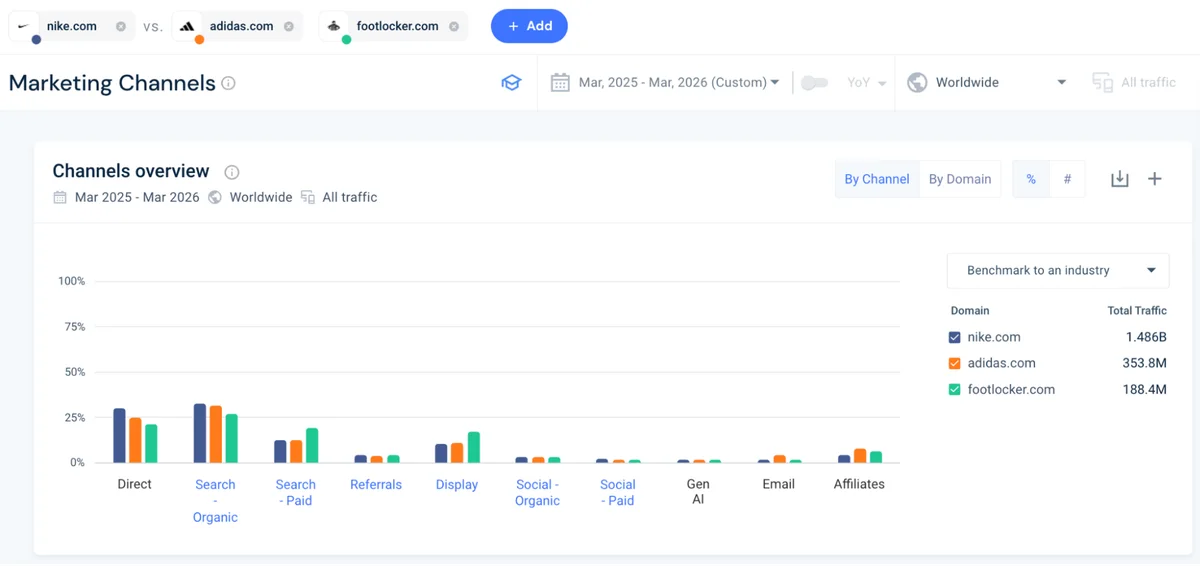
The channel view splits traffic into direct, organic and paid search, referrals, display ads, social, email and affiliates. Visits from AI chatbots like ChatGPT now count as a channel of their own. That tells you whether a competitor lives off Google, spends heavily on ads or grows through partner sites.
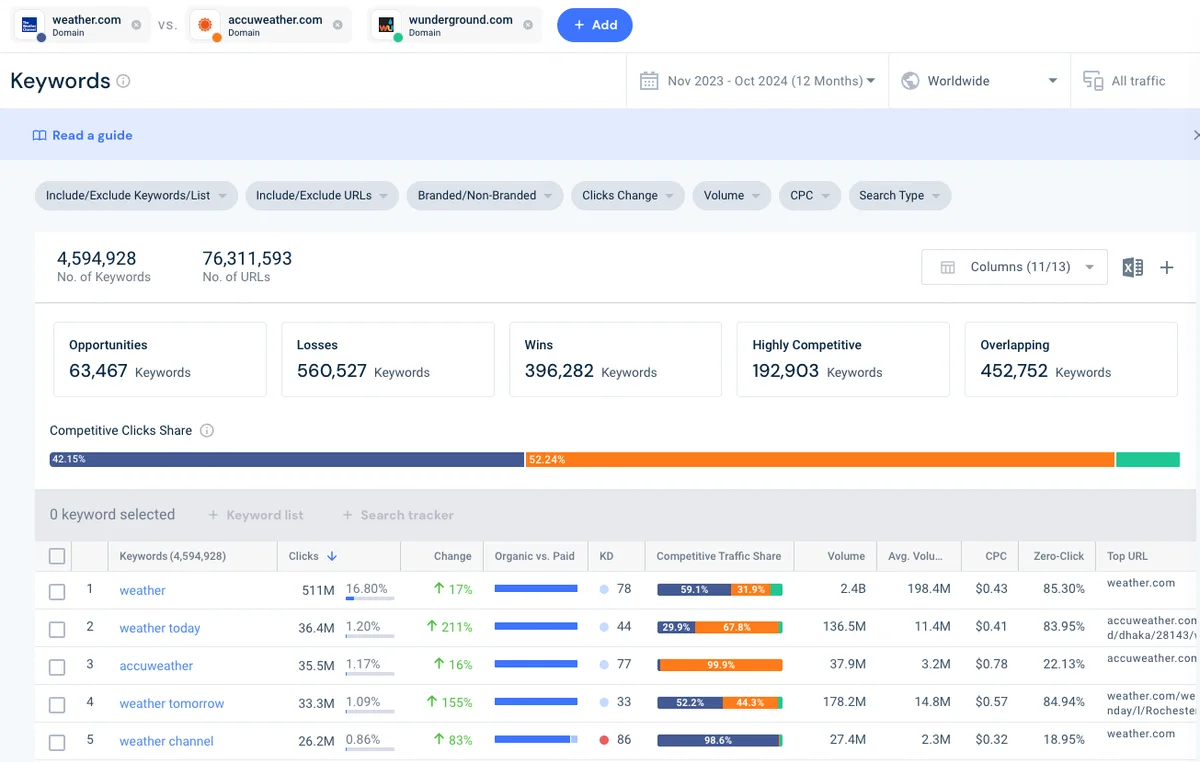
Each source lets you go one level deeper: which sites link in, which search terms drive clicks, which ads are running. Alerts flag it when something changes noticeably for a competitor you follow.
How accurate the numbers are
Similarweb doesn't measure other people's websites, it estimates them. According to Similarweb, the inputs are anonymous usage data from its own products such as the browser extension, data from partners like internet service providers, public sources and sites that connect their Google Analytics. A model turns that into visit counts.
For very small sites that barely works: below 5,000 visits a month, Similarweb shows no numbers at all. A SparkToro study that Similarweb itself cites ranked its estimates ahead of other providers, most accurate for sites with 5,000 to 100,000 monthly users. Trends and ratios between competitors are reliable; a single absolute number isn't.
Free version and browser extension
On similarweb.com you get a free overview for most larger websites: visits over time, bounce rate, top countries, traffic sources and the strongest keywords. The Chrome extension shows the same numbers for whatever page you're on. For a quick sense of how big a prospect or competitor is, that's enough.
The extension still comes at a cost: before you can use it, you agree to let it collect anonymized data about the domains you visit. That data feeds the estimates. If you'd rather not, use the website instead.
Similarweb pricing: you pay for modules, not seats
The self-serve plans don't differ in users or projects but in modules: the entry plan covers competitive intelligence, the middle plan adds keyword research, rank tracking and AI-answer visibility, the top plan adds ad intelligence. Moving up to the SEO plan only makes sense if you don't already pay for an SEO suite, otherwise you're paying twice for the same features. Every account has exactly one user; teams go through sales.
The catch is at the start: the free trial runs on a credit card and turns into a paid subscription automatically unless you cancel. You can cancel anytime in your account settings; access continues until the end of the paid period.
What we like about Similarweb and what we don't
Pros
- Covers every channel, not just Google
- Side-by-side competitor comparisons
- Useful free overview and extension
- Self-serve cancellation, monthly billing available
- Tracks visits from AI chatbots
Cons
- Expensive, every plan is one user
- Short history on entry plans
- Extension collects anonymized browsing data
Similarweb is the tool for sizing up a market and its players and seeing which channels drive their growth. For day-to-day work on your own Google visibility there are cheaper options; you'll find a selection in our overview of SEO tools.
Pricing
Free
$0
- Traffic overview for any site on similarweb.com
- Chrome extension with visits, sources and top keywords
- Top-line visits, traffic sources and countries
Competitive Intelligence
$125 / month
- 1 user, 3 months of historical data
- Traffic, engagement and audience for any website
- Marketing channels and competitor alerts
Competitive Intel, SEO & AEO
$333 / month
- 1 user, 6 months of historical data
- Keyword research, rank tracker, site audit and backlinks
- AI answer visibility with 150 tracked prompts
Competitive Intel, SEO, AEO & Ads
$542 / month
- 1 user, 6 months of historical data
- Everything in the SEO plan
- Competitors' ads and ad spend
Business
Custom
custom quote from sales
- Multiple users and up to 37 months of data
- API, data feeds and MCP access
- SSO and a dedicated account contact
Prices may change — check the official website for current plans.
Alternatives by use case
- SE Ranking If you work solo and mainly need your own rankings plus competitor keywords
- Semrush If your team wants a complete SEO and content suite
- Serpstat If you want competitor keyword research on a smaller budget
- DataForSEO If you want raw data via API and prefer paying per request


Frequently Asked Questions
How much does Similarweb cost?
Similarweb prices by module, not by seat: each self-serve plan covers one person. Paying annually saves between a sixth and a third depending on the plan. Exact prices are in the plan cards, checked November 2026.
Is Similarweb free?
Partly. On similarweb.com and in the Chrome extension you can see visits, traffic sources, countries and top keywords for most larger websites at no cost, but only as high-level numbers. The full platform comes with a 7-day free trial. You need a credit card to start it, and unless you cancel before it ends, the trial rolls into a paid subscription automatically.
Similarweb vs Semrush: which is better?
They answer different questions. Semrush comes from search marketing and is strongest at keyword research, backlinks, site audits and rank tracking. Similarweb looks at a site's entire traffic, including direct visits, referrals, social, display ads, email and AI chatbots. If you're working on your own rankings, Semrush or a cheaper SEO suite is the better fit. If you want to understand how big competitors are overall and which channels drive their growth, Similarweb is the tool.
How accurate is Similarweb?
Similarweb estimates traffic for other sites from panel data, partner data, public sources and connected analytics accounts. According to its own help center, it shows no data at all for sites under 5,000 monthly visits. For your own site you can connect Google Analytics so Similarweb shows your measured visits.
Is Similarweb worth it for freelancers and small businesses?
As an ongoing subscription, usually not. For an occasional look at a competitor or a prospect, the free version and the extension are enough. If you need the data for one project, such as a market analysis or a pitch, you can buy the entry plan monthly and cancel once the project is done. An annual plan only pays off if you produce competitor reports for clients on a regular basis.
Verdict
Similarweb answers a question your own analytics can't: how much traffic competitors get and which channels bring it. For growing teams and agencies that regularly prepare pitches, market research or campaigns, that's a strong foundation. For a solo freelancer it's usually overkill, because every plan covers one user and costs more than a full SEO suite. The free version covers the occasional check, and if your focus is your own rankings, SE Ranking is the better fit.