Best Time Tracking Software 2026: 10 Tools for Freelancers & Small Businesses
Fastlancer Team · Updated: Aug 26, 2026
If you bill by the hour, run several projects in parallel or simply want a clearer view of where the workday goes, time tracking pays for itself fast. What it removes is the month-end guesswork: hours reconstructed from memory, forgotten sessions, invoices that undercount the work.
This comparison covers ten time tracking tools for freelancers and small businesses in 2026 — from free to paid, with project billing and accounting integrations. The criteria: free plan, how quickly time gets captured, project and client assignment, stored hourly rates, reporting, solo and team fit, integrations into invoicing and accounting, and availability as browser, desktop and mobile app.
Quick solo start
One-click timer and clean reports. The lowest-friction way to start billing by the hour.
Free for up to 5 users
Jump to the toolMost in the free plan
Budgets, timesheets and team features without a monthly fee.
Free for up to 5 users
Jump to the toolHours become an invoice
Tracked time turns into a sent invoice in the same tool, with per-project rates.
Free for 1 user, 2 projects
Jump to the toolAutomatic suggestions
Records activity in the background and suggests entries you review. For people who forget timers.
No permanent free plan
Jump to the toolFind your time-tracking tool in 30 seconds
Simple solo tracking
You want a fast timer and clean reports for client hours, nothing else.
Jump to the toolMore in the free plan
You need budgets, timesheets or a small team without a monthly fee.
Jump to the toolTrack time and invoice clients
Tracked hours should become a sent invoice without retyping them anywhere.
Jump to the invoicing sectionAutomatic time suggestions
You forget timers or switch between tasks constantly. The tool watches and proposes.
Jump to the toolEU hosting and small teams
You need German servers, German support and attendance for a handful of people.
Jump to the toolCompare all 10 tools
-
Quick solo start
Free for up to 5 users
Includes: One-click timer · projects and clients · reports · CSV and PDF export
Watch out: Invoices need a second tool
Jump to the tool -
Most in the free plan
Free for up to 5 users
Includes: Projects · timesheets · budgets · reports · no user fee up to five
Watch out: Invoicing and GPS sit behind paid tiers
Jump to the tool -
Hours become an invoice
Free for 1 user, 2 projects
Includes: Timer · per-project rates · invoices sent and tracked · Asana, Trello, Slack, Stripe
Watch out: The free tier runs out at the third project
Jump to the tool -
Focus sessions
Free plan, Premium from about $3 a month
Includes: Task lists · calendar · Pomodoro timer · habits
Watch out: A focus timer, not a billing tracker
Jump to the tool -
Automatic time suggestions
No permanent free plan
Includes: Background activity capture · suggested entries · drag-and-drop into projects
Watch out: Suggestions still need a daily review
Jump to the tool -
Keyword-based tracking and invoicing
Free for solo use
Includes: Keyword rules · offline sync · invoicing module · broad integrations
Watch out: The mobile app is the weak part
Jump to the tool -
EU hosting and teams
Free solo tier, paid from the Pro tier
Includes: German servers and support · locked entries · mobile offline mode · invoice drafts
Watch out: The invoice leaves through a second tool
Jump to the tool -
Apple-only workflow
One-time purchase or subscription
Includes: Native Apple apps · calendar suggestions · location-based entries
Watch out: Nothing outside the Apple ecosystem
Jump to the tool -
Local and offline
One-time purchase
Includes: Foreground app detection · local rules · no cloud, no subscription
Watch out: Mac only, and rules need setting up once
Jump to the tool -
Self-hosted
Open source, self-hosted
Includes: Reports · project management · invoicing add-ons · API · full data control
Watch out: Hosting, updates and setup are your job
Jump to the tool
| Tool | Best for | From | Free / trial | Invoicing | Tracking | Team / EU | Platforms | Watch out for |
|---|---|---|---|---|---|---|---|---|
 Toggl Track Toggl Track | Quick solo start | Free for up to 5 users | Free plan, paid tiers with a 30-day trial | Export only, no invoicing | Manual timer + idle detection | Teams up to five free | Web, macOS, Windows, iOS, Android | Invoices need a second tool |
 Clockify Clockify | Most in the free plan | Free for up to 5 users | Free plan, no expiry | From the Standard tier | Manual timer + idle detection | Teams up to five free | Web, macOS, Windows, Linux, iOS, Android | Invoicing and GPS sit behind paid tiers |
 Harvest Harvest | Hours become an invoice | Free for 1 user, 2 projects | Free tier, then per seat | Built in, send and track payment | Manual timer | Solo focus | Web, macOS, Windows, iOS, Android | The free tier runs out at the third project |
 TickTick TickTick | Focus sessions | Free plan, Premium from about $3 a month | Free forever | No | Pomodoro focus sessions | Solo focus | Web, macOS, Windows, iOS, Android | A focus timer, not a billing tracker |
 Timely Timely | Automatic time suggestions | No permanent free plan | 14-day trial | No | Automatic time suggestions (review required) | Solo focus | Web, macOS, Windows, iOS, Android | Suggestions still need a daily review |
 TimeCamp TimeCamp | Keyword-based tracking and invoicing | Free for solo use | Free tier, then per seat | Built in | Keyword and rule-based | Solo focus | Web, macOS, Windows, Linux, iOS, Android | The mobile app is the weak part |
 Clocko:do Clocko:do | EU hosting and teams | Free solo tier, paid from the Pro tier | Free solo tier plus a 14-day trial | Drafts, sent through your accounting tool | Manual timer, mobile offline mode | German servers, team attendance | Web, iOS, Android | The invoice leaves through a second tool |
 Tyme Tyme | Apple-only workflow | One-time purchase or subscription | Trial | Via export | Calendar and location-based | Solo focus | macOS, iOS, iPadOS only | Nothing outside the Apple ecosystem |
 Timemator Timemator | Local and offline | One-time purchase | Trial | No | Local app and file-based | Solo focus | macOS only | Mac only, and rules need setting up once |
 Kimai Kimai | Self-hosted | Open source, self-hosted | Free without limits if you host it | Via add-ons | Self-hosted manual | Self-hosted teams | Self-hosted web, any browser | Hosting, updates and setup are your job |
Prices show the checked entry point. Plans, user limits and billing cycles vary by provider. The order of the ten tools is editorial and does not change with the filter — filters hide tools, they never reorder them.
All 10 tools in detail
1. Toggl Track — Quick solo start
- From
- Free for up to 5 users
- Free / trial
- Free plan, paid tiers with a 30-day trial
- Tracking
- Manual timer + idle detection
- Invoicing
- Export only, no invoicing
- Platforms
- Web, macOS, Windows, iOS, Android
- Watch out for
- Invoices need a second tool
Toggl Track is the best-known time tracking tool for freelancers — for good reason. One-click timer, clear project organization, useful reports, and a free plan for up to five users. Works in the browser, as a desktop app, and on iOS/Android — entries sync cleanly across devices. If you want to hand off hours as CSV/PDF to your accountant, you can without detours.
Best for: Solo freelancers and small teams who want to get started fast.
Fastlancer tip: Enable the "Idle Detection" timer in the desktop client — it asks automatically after longer breaks whether to keep the timer running. Saves the typical "forgot to stop" correction at end of day.
2. Clockify — Most in the free plan
- From
- Free for up to 5 users
- Free / trial
- Free plan, no expiry
- Tracking
- Manual timer + idle detection
- Invoicing
- From the Standard tier
- Platforms
- Web, macOS, Windows, Linux, iOS, Android
- Watch out for
- Invoicing and GPS sit behind paid tiers
Clockify is one of the most generous free time trackers — though capped at 5 users since April 2026 — including projects, timesheets, budgets, and reports. For freelancers who want maximum feature coverage without a monthly fee, this is the obvious choice. Premium features like invoicing or advanced reports can be added later if needed. Torn between the two most popular free trackers? Our Clockify vs Toggl comparison puts them head-to-head.
Best for: Freelancers who want maximum functionality for free.
Fastlancer tip: Create a separate "workspace" color per client and use tags like "billable/internal" — at month-end you instantly see what you can invoice and where time is leaking.
3. Harvest — Hours become an invoice
- From
- Free for 1 user, 2 projects
- Free / trial
- Free tier, then per seat
- Tracking
- Manual timer
- Invoicing
- Built in, send and track payment
- Platforms
- Web, macOS, Windows, iOS, Android
- Watch out for
- The free tier runs out at the third project
Harvest combines time tracking with invoicing and visual reporting in one tool. Tracked hours flow directly into invoices, including stored hourly rate per client and project. Integrations to Asana, Trello, Slack, and Stripe make it the easy pick if you juggle several client projects in parallel and don't want to switch between three tools.
Best for: Freelancers running several projects who want tracking + invoicing in one tool.
Fastlancer tip: Set up "budget alerts" per project. As soon as you hit 80 % of the agreed hours budget, you get a notification — time for a re-briefing with the client before you work unpaid over budget.
4. TickTick — Focus sessions
- From
- Free plan, Premium from about $3 a month
- Free / trial
- Free forever
- Tracking
- Pomodoro focus sessions
- Invoicing
- No
- Platforms
- Web, macOS, Windows, iOS, Android
- Watch out for
- A focus timer, not a billing tracker
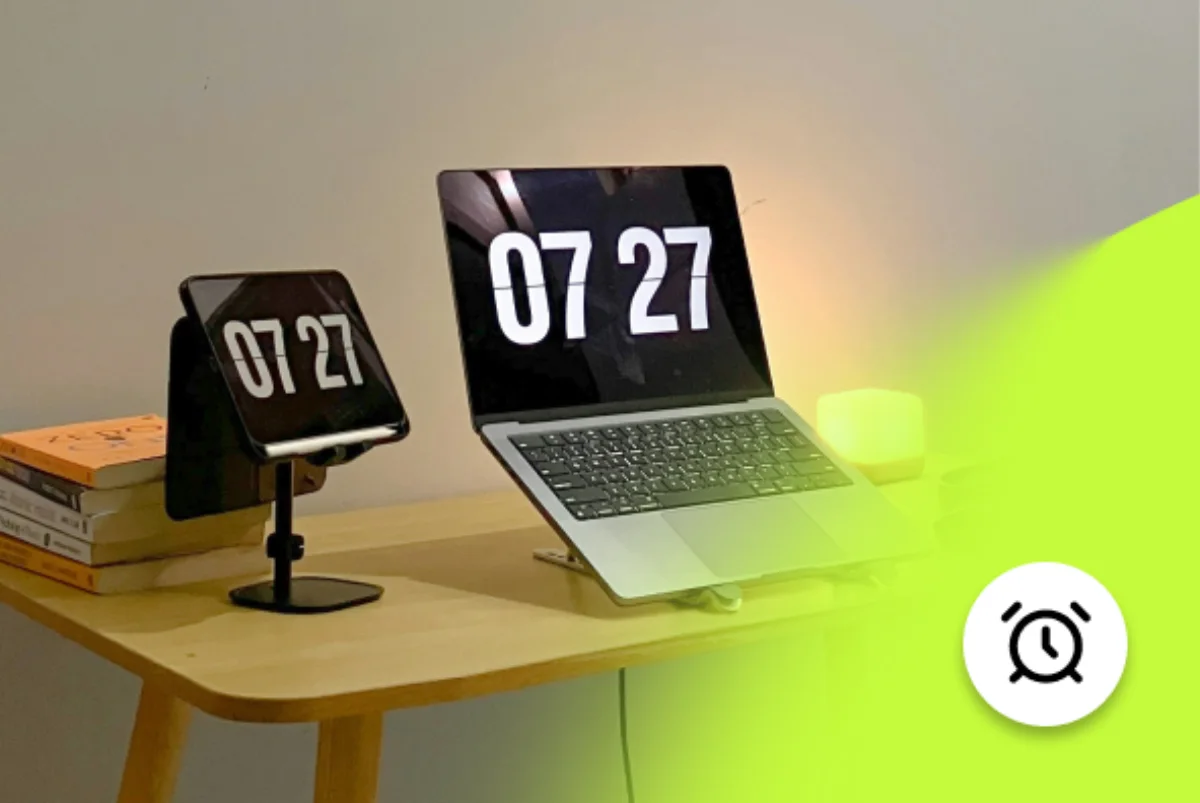
Primarily a task manager with an integrated Pomodoro timer that supports focused work sessions. Many freelancers use it as a productivity booster rather than a strict invoicing tracker — and if you prefer your countdown physically visible on the desk instead of in another browser tab, the classic Time Timer MOD pairs well with any digital tracker in this list. The free plan covers basics; premium adds calendar sync, habit tracking, and detailed focus analytics.
Best for: Freelancers who want time tracking baked into a task and focus workflow.
Fastlancer tip: Set up a Pomodoro length that matches your actual deep-work window (often 45–50 min, not the textbook 25) — the focus stats then reflect real billable concentration, not arbitrary blocks.
5. Timely — Automatic time suggestions
- From
- No permanent free plan
- Free / trial
- 14-day trial
- Tracking
- Automatic time suggestions (review required)
- Invoicing
- No
- Platforms
- Web, macOS, Windows, iOS, Android
- Watch out for
- Suggestions still need a daily review
Timely uses a local "Memory Tracker" that records in the background which apps, documents, and browser tabs you used. From that, the AI suggests time entries which you sort into projects via drag-and-drop — no manual start/stop. Raw data stays local until you release it, a real plus for privacy-conscious freelancers. One caveat: Memory Tracker is built for desk work — if your billable hours happen on job sites rather than in a browser, location-based tracking is the better fit (see the field-work section below).
Best for: Freelancers who jump between tasks often and forget to track.
Fastlancer tip: Plan 5 minutes at end of day to review the AI suggestions — it's significantly faster than manual tracking and you still get clean, billable entries.
6. TimeCamp — Keyword-based tracking and invoicing
- From
- Free for solo use
- Free / trial
- Free tier, then per seat
- Tracking
- Keyword and rule-based
- Invoicing
- Built in
- Platforms
- Web, macOS, Windows, Linux, iOS, Android
- Watch out for
- The mobile app is the weak part
TimeCamp tracks in the background by keywords (e.g. "Client X" in the window title) and assigns time automatically to the right project. Add offline sync, an integrated invoicing module, and broad integrations. The mobile app isn't the highlight; on desktop, TimeCamp is one of the strongest solutions for structured project hours.
Best for: Structured project tracking + direct invoicing.
Fastlancer tip: Create keyword rules per client ("Webflow", "Client-XY"). As soon as a matching app/browser title appears, the timer runs on the right project — no clicks needed.
7. Clocko:do — EU hosting and teams
- From
- Free solo tier, paid from the Pro tier
- Free / trial
- Free solo tier plus a 14-day trial
- Tracking
- Manual timer, mobile offline mode
- Invoicing
- Drafts, sent through your accounting tool
- Platforms
- Web, iOS, Android
- Watch out for
- The invoice leaves through a second tool
Clocko:do is a German provider offering GDPR-compliant cloud time tracking with intuitive timesheets and integrations with invoicing tools (from the Pro tier). Servers in Germany, German support, plus full audit-trail features — everything most EU freelancers miss in US tools. Practical for recurring billing and mandates where you need to document cleanly.
Best for: EU freelancers with a GDPR and invoicing focus.
Fastlancer tip: Store a fixed hourly rate per client and use the "revenue" report — Clocko:do shows live how much a running project has already earned.
8. Tyme — Apple-only workflow
- From
- One-time purchase or subscription
- Free / trial
- Trial
- Tracking
- Calendar and location-based
- Invoicing
- Via export
- Platforms
- macOS, iOS, iPadOS only
- Watch out for
- Nothing outside the Apple ecosystem
Tyme lives on macOS, iOS, and iPadOS and feels like a native Apple app: reduced UI, fast input, automatic tracking via Apple location services and calendar. If you work purely in the Apple ecosystem, Tyme is a fast, unobtrusive time tracker — no web-app bloat.
Best for: Apple-only freelancers who want a fast, minimal tool.
Fastlancer tip: Link Tyme with your calendar app — meetings appear as suggestions in the tracker and can be accepted as work time in one or two clicks.
9. Timemator — Local and offline
- From
- One-time purchase
- Free / trial
- Trial
- Tracking
- Local app and file-based
- Invoicing
- No
- Platforms
- macOS only
- Watch out for
- Mac only, and rules need setting up once
Timemator is a Mac tracker that locally detects which application is in the foreground and assigns time to the matching project — no start/stop needed. No cloud, no subscription, one-time purchase. If you're sceptical about cloud storage for your work data and prefer to work undisturbed, Timemator fits perfectly.
Best for: Mac users who work offline and don't want a monthly fee.
Fastlancer tip: Set "auto-tracking rules" cleanly once per project (e.g. "If Figma + file XY, start project Z"). After that, time tracking runs practically invisibly in the background.
10. Kimai — Self-hosted
- From
- Open source, self-hosted
- Free / trial
- Free without limits if you host it
- Tracking
- Self-hosted manual
- Invoicing
- Via add-ons
- Platforms
- Self-hosted web, any browser
- Watch out for
- Hosting, updates and setup are your job
Kimai is the best-known open-source time tracker — hosted on your own server. Reports, project management, invoicing add-ons, and API access all included. Maximum data control, zero recurring license fees — in exchange you handle hosting and updates yourself. If you're not afraid of a small PHP install, you get a first-class tool.
Best for: Freelancers with a technical background who want full data control.
Fastlancer tip: Start with a Hetzner or UpCloud VPS and the official Docker install — in under an hour you have a productive Kimai instance fully under your control.
Hours into an invoice: which tools close the loop?
For most freelancers, tracking hours is not the point — getting paid for them is. The question underneath is always the same: can this tool turn a month of logged time into a sent invoice, or does that mean retyping everything into a second system? On that question, the ten tools above fall into four groups.
Invoicing built in — hours become an invoice in the same tool
Harvest and TimeCamp are the two that close the loop themselves. You select the unbilled hours for a client, generate the invoice, send it, and the tool tracks whether it has been paid. Nothing leaves the system in between, which is what makes the monthly billing round a ten-minute job instead of an afternoon. Harvest is the more polished of the two for client-facing work; TimeCamp is the stronger tracker underneath.
Drafts in the tool, the invoice in your accounting software
Clocko:do sits in between and is often misread. It does turn tracked project time into invoice drafts, but the finished invoice goes out through Lexware Office, sevDesk or easybill. For anyone who already runs their bookkeeping in one of those, that is an advantage rather than a limitation — the invoice lands where the accounting lives. For anyone who wants one tool and no second subscription, it is an extra step.
Free time tracking and invoicing in one tool
This combination exists, and it is narrower than most lists suggest. Harvest's free plan (1 user, 2 projects) includes invoicing — enough for a solo freelancer with a small client base. TimeCamp's free tier covers solo use with invoicing as well. Kimai is free without limits if you self-host it, with invoicing through add-ons. Clockify is the one to watch out for here: the tracking is generously free for up to 5 users, but invoicing is a paid add-on, so "free time tracking and invoicing" does not describe it.
Tracking only — plan for a second tool
Toggl Track, Timely, Timemator and TickTick do not invoice. That is not a flaw — Toggl and Timely are the better trackers for many people — but it means the hours have to reach an invoicing tool somehow, usually by CSV export or an integration. If you already run invoicing software you like, this route is fine; our invoicing software comparison covers what pairs well. If you don't, one of the tools above saves you a second subscription.
Time tracking for contractors: what changes
Time tracking for contractors follows different rules than the freelancer setups above — and the word carries two meanings at once in the US. It means the independent contractor on a 1099 who has to substantiate billable hours to a client, and it means the general contractor or trades business whose hours happen on a site rather than on a screen. Different work, same broken assumption: that time belongs to a client and gets logged from a desk.
Four requirements show up in both readings.
Hours belong to a job, not a client. A contractor rarely bills Client X, six hours. They bill a job — a unit, a phase, a work order — and the same client may have four of them running at once. Tools that only know clients and projects still work, but you end up creating one project per job and the yearly overview turns to mush.
Capture happens where the work is. On a changing site, the timer has to live in a pocket. Toggl Track, Clockify and Clocko:do all ship iOS and Android apps alongside the browser version, so the entry is made on the spot rather than reconstructed on Friday.
Offline is not optional. Basements, new builds and rural sites have no signal. Toggl Track's desktop and mobile apps store entries locally and sync on reconnect — only the browser version needs a live connection. Clocko:do has an explicit offline mode in its mobile app aimed at field teams, and TimeCamp syncs offline entries as well. Timemator sidesteps the question entirely by staying on the Mac with no cloud.
The hours have to turn into an invoice. Retyping a timesheet into an invoice tool is where hours get lost. Harvest converts tracked time into a client invoice in one step; TimeCamp has an invoicing module; Clockify adds invoicing from the Standard plan ($5.49/user/month). Everything else exports PDF or CSV for your accounting tool.
Where the two readings split is the crew. A solo 1099 contractor needs an accurate log; a trades contractor with four people on two sites needs several people clocking in without anyone typing anything. That is a different feature set — GPS clock-in, geofencing, kiosk mode — and it lives in tools that sit outside the ten compared above: Hubstaff puts GPS tracking and geofencing (automatic clock-in and clock-out when someone enters a defined location) on its Team plan at $10/seat/month, Jibble keeps a time clock with GPS and a face-recognition kiosk free for unlimited users, and Workyard is built for construction crews specifically — more on it in the next section.
| Contractor requirement | Covered by |
|---|---|
| Billable rate per job | Toggl Track (Starter, $9/user/month), Clockify (Basic, $3.99/user/month), Harvest, Clocko:do (Pro tier) |
| Mobile capture on site | Toggl Track, Clockify, Clocko:do, Tyme (Apple only), Hubstaff, Jibble |
| Works offline | Toggl Track (desktop + mobile), Clocko:do (mobile offline mode), TimeCamp, Timemator (fully local) |
| GPS clock-in / geofencing | Hubstaff (Team, $10/seat/month), Clockify (Pro tier), Jibble (free), Workyard |
| Several people clocking in | Jibble (kiosk, free for unlimited users), Hubstaff (2-seat minimum on paid plans), Workyard |
| Hours become an invoice | Harvest, TimeCamp, Hubstaff, Clockify (Standard, $5.49/user/month) |
| Entries can be locked | Toggl Track (Premium), Clockify (Standard and above), Harvest (paid plans) |
For a 1099 contractor there is a second job the time log quietly does: it is the evidence. When a client questions an invoice weeks later, a timesheet with locked entries and a per-day breakdown ends the conversation, while a reconstructed estimate invites a negotiation. That is the practical argument for paying for the tier that locks entries once you bill hourly at any volume — the log stops being your memory and starts being a record. What none of these tools can do is tell you how those hours and the income they produce should be treated on a tax return; that is a conversation for your tax advisor or CPA, not for a time tracker.
Field teams and construction: Workyard
Every tool above assumes your billable hours happen at a desk. If they happen on job sites, none of them fit: an app-activity tracker sees nothing when the work is framing a wall, and asking a crew to start and stop timers by hand produces guesswork at the end of the week. That is the gap construction time tracking software with gps fills.
Workyard clocks people in and out based on location instead of app usage, so hours land against the right site without anyone typing them in. It records GPS-verified arrival and departure times, tracks mileage between jobs, and rolls the result into job-costing and payroll-ready reports — useful when hours have to hold up against a client invoice or a labour audit. Built for construction and trades: contractors, electricians, landscapers, and anyone billing crew time rather than screen time.
Best for freelancers and small businesses whose work is on site, not in a browser — and specifically for anyone managing a team whose hours currently arrive as text messages.
Further alternative: WorkingHours
WorkingHours is a lightweight option for anyone who wants simple tracking, analysis and export without a larger platform or a typical subscription. It is not one of the ten primary tools compared above, but it fits a low-complexity workflow. Take a look at the time tracking tool WorkingHours by indie developer Timo Partl. It offers all the essentials — time tracking, analysis, export — without a subscription model. An honest alternative if you're tired of the big providers and just want a clean, paid-once tool.
Want to manage not just your time but also your invoices cleanly? Many time tracking tools connect directly to dedicated invoicing software — see our broader picks below. And if pricing and hourly-rate calculation interest you, the Fastlancer Greenprint gives you the compact foundation.
Looking at the bigger picture? Our hub guide The Best Tools for Freelancers in 2026 covers top picks across every category — invoicing, banking, project management and more.
Which time tracking tool is the best fit for you?
Quick start, all in the free plan: Toggl Track, Clockify
Time tracking with direct invoicing: Harvest, TimeCamp (Clocko:do: via invoicing-tool integrations)
EU compliance & data residency: Clocko:do, Kimai (self-hosted)
Automatic, "invisible" tracking: Timely, Timemator, TimeCamp
Apple-only & minimalist: Tyme, Timemator
Self-hosted / open source: Kimai
Crews and field work (GPS): Workyard
Keep reading
Frequently Asked Questions
Which time tracking tool is free?
The most generous free plan is Clockify (up to 5 users since April 2026) — including projects, reports, and multiple users. Toggl Track offers a very generous free plan for up to five people. Kimai is open-source and self-hostable, so it's also free — but requires some technical setup. For small teams that need attendance features (time clock, kiosk, GPS), Jibble keeps its core free forever for unlimited users. For solo freelancers, the first three options cover most needs.
Best time tracking tool for solo freelancers without a team?
Toggl Track is the obvious recommendation: fast timer, clean UI, usable reports — and all available in the free plan. If you want more features completely free (like timesheets and budgets), pick Clockify. For pure background tracking without manually starting a timer, Timely or Timemator are interesting — both detect automatically which apps and documents you used.
How do I track time for client invoicing?
Track time per project and per client — ideally with a stored hourly rate. Harvest and TimeCamp generate invoices directly; Clocko:do hands over to invoicing tools; Toggl Track and Clockify export clean timesheets as PDF/CSV that you import into your accounting tool. Important: any time you don't track, you can't bill — better to track too finely than too roughly.
Time tracking with invoicing — is that possible?
Yes. Harvest offers time tracking plus invoice sending in one tool. TimeCamp can also generate invoices. If you want full accounting compliance, however, combine a time tracking tool with dedicated invoicing software — separating tracking from accounting keeps both stacks cleaner.
What are the best time tracking tools for freelancers in 2026?
The strongest picks for 2026 are: Toggl Track for fast individual use with the best UX in the category; Clockify as the most generous free plan (up to 5 users); Harvest for the combo of tracking and invoicing in one tool; Timely for AI-powered automatic tracking that runs in the background; TimeCamp for keyword-based automatic detection of which projects you're working on; and Kimai as the open-source self-hosted option. Solo freelancers typically pick Toggl Track or Clockify; agencies running multiple projects benefit from Harvest or TimeCamp.
What's the best time tracking software for freelancers and self-employed people?
For most freelancers in 2026, Toggl Track is the right starting point — it has the fastest timer, the cleanest interface and a free plan for up to 5 users. The decision tree: if you need invoicing in the same tool, pick Harvest; if you have a team of 5+ on a budget, pick Clockify; if you hate manually starting timers, pick Timely for automatic tracking. For European freelancers needing GDPR-compliant tracking, Clocko:do remains the strongest local pick — it builds the invoice drafts and hands them to Lexware Office, sevDesk or easybill for sending. Everything else is variations on these themes.
Can I use time tracking software to prove billable hours to clients?
Yes — all the tools in this guide export timesheets in PDF or CSV format that you can attach to invoices as evidence of work done. Harvest and Clocko:do go further: they generate fully formatted client-facing reports with project breakdown and hourly rate calculations. For freelancers working on hourly retainers where audit-trail matters (legal, agency, consulting), pick a tool with locked time entries (Toggl Track Premium, Clockify Standard+, Harvest paid plans) — once entries are locked, neither side can change them retroactively — stronger documentation than a reconstructed estimate.
What is the best time tracking software for contractors?
It depends which contractor you mean, because the word covers two businesses. For a solo 1099 contractor billing a client by the hour, Toggl Track is the strongest pick: the desktop and mobile apps store entries locally and sync on reconnect, so a basement or a rural site does not cost you the log, and the Premium tier locks entries once they are booked. Clockify does the same job cheaper if all you need is a billable rate per job (Basic, $3.99/user/month), and Harvest is the answer when the hours have to become an invoice without retyping. For a trades or construction contractor with people on site, none of those fit — you need GPS clock-in and a shared time clock, which lives in Jibble (free for unlimited users), Hubstaff (Team, $10/seat/month) and Workyard. All three sit outside the ten tools compared above.
How do contractors track crew hours across several job sites?
Not with a timer somebody has to remember to start. Crew capture runs on GPS clock-in and geofencing — the app clocks a person in when they reach a defined site and out when they leave it — or on a kiosk, one shared tablet everybody punches in on. Jibble keeps a GPS time clock and a face-recognition kiosk free for unlimited users, Hubstaff puts GPS and geofencing on its Team plan at $10/seat/month (2-seat minimum), Clockify adds GPS on its Pro tier, and Workyard is built for construction crews specifically. The ten desk-first tools compared above cannot do this: an activity tracker that reads app and window titles has nothing to read on a job site, and hours reconstructed on Friday from memory are the thing you are trying to get rid of.