
How to become a freelancer in 2026
The big dream of full-time freelancing
The desire for more freedom is strong for many employees: no rigid office hours, choosing your own projects, and deciding how your day looks. The step into full-time self-employment as a digital freelancer sounds appealing, but it’s not a leap into the unknown — it’s more of a planned transition.
Many people don’t start freelancing full-time right away. Instead, they begin part-time to combine security with first-hand experience. This approach allows you to find clients, test processes, and develop a feel for your new day-to-day work.
What matters most is a willingness to learn — not only in your professional field, but also in organization, marketing, and finances. Building a freelance business takes time and energy, especially in the beginning. But you don’t need to know everything from day one. Step by step, you can build the foundations while gradually learning how to work independently and grow a digital business.
1.Start with an honest self-assessment
Before jumping into freelancing, it’s worth doing a quick reality check. Ask yourself: do I have the professional skills to actually offer my service? And just as important: am I willing to take on the full responsibility that comes with self-employment?
As a digital freelancer, you’re not only responsible for project work, but also for organization, invoicing, client communication, and marketing.
Be honest about where you currently stand. What skills do you already have? Which areas still need improvement? And most importantly: are you genuinely interested in the topic you want to offer? Passion helps enormously when things don’t run smoothly at the beginning.
Perfect preparation isn’t required. Many freelancers start with a small side project alongside their main job to see what freelance life really feels like. Don’t overthink it — just start. You’ll learn fastest through real-world experience.

Symbolic picture / source: unsplash.com
2. Define your niche and target clients
Especially in the beginning, many freelancers fall into the trap of trying to offer everything to everyone. While that sounds like more opportunity, it actually makes positioning harder.
Start by asking yourself: who am I, what can I do, and what do I truly want to offer? Equally important is the reverse question: which projects or topics do I not want to work on?
A clear niche helps you stand out and attract the right clients. Do you want to work with small businesses, startups, or solo entrepreneurs? Tailor your offer specifically to their needs. For example, a designer might specialize in fast MVP designs for early-stage startups, while a copywriter focuses on conversion-optimized landing pages for coaches.
The more precisely your service solves a specific problem, the easier it becomes to win clients and get referrals. A clear niche doesn’t limit you — it makes you recognizable.
3. Build a solid foundation
You need a stable foundation to build your freelance business on — and that’s more than just a website. As a digital freelancer, you should clarify whether you’re starting as a freelancer or with a registered business, and apply for a tax number.
A tax advisor can save you a lot of work and help set things up correctly from the start. A simple invoicing and bookkeeping system is also invaluable — it keeps you organized and prevents stress later on. Good self-organization is essential. Fixed working hours and clear structures help you work more efficiently, especially if you’re freelancing alongside a full-time job.
Your portfolio is one of the most important building blocks. It shouldn’t just look nice — it should clearly communicate the value of your work. Focus on projects you actually enjoy, as this naturally attracts clients you’ll want to work with long-term.

Symbolic picture / source: unsplash.com
4. Finding your first clients: quality over quantity
Landing your first clients is often the hardest part of starting out. Instead of aiming for volume, start small and focused.
Begin with your personal network. Friends, former colleagues, or acquaintances may know someone who needs your help. Tell everyone about your new step — sometimes the first project comes from the most unexpected place.
Online, you can build visibility by being active on LinkedIn, in niche communities, or freelancer groups. Five well-written, personal messages are far more effective than sending 50 generic pitches.
Cold outreach can work if it’s targeted and personal. Avoid templates and instead reference the company directly: “I noticed your website could benefit from X — here’s how I could help.” Tools like Lemlist or Mailchimp or Beefree can support professional outreach, but always check the legal rules for cold emails in your country.
Offline outreach can also be surprisingly effective. Visiting a local business with a concrete idea often leaves a stronger impression than an anonymous email. It shows initiative and genuine interest.
5. Continuous learning is your best investment
Your skills are your most valuable asset as a digital freelancer. That’s why ongoing learning should be a core part of your routine from the very beginning — not something you postpone until later.
Plan time and a small budget for learning. Online platforms like Udemy, Skillshare, or LinkedIn Learning offer affordable, practical courses to help you stay up to date with tools and trends.
But don’t limit yourself to online learning. Attend meetups, conferences, or talks whenever possible. You’ll gain fresh insights and make valuable connections.
Regularly exchange experiences with other freelancers, especially those who’ve been in the business longer. Their real-world lessons are often more valuable than any course. Another strong tip: review reports and statistics from freelance platforms. This helps you spot in-demand skills early and adjust your direction before the market shifts.

Symbolic picture / source: unsplash.com
Actionable tips you can implement right away
Write to three former colleagues or contacts and ask if they know anyone who could use your services.
Create a mini case study for a project — even a side job — and add it to your portfolio.
Share a behind-the-scenes look at your work on LinkedIn or Instagram this week, such as your workflow or a before-and-after comparison.
Join a freelancer community, online or locally, and introduce yourself. Networks are incredibly valuable.
Test freelancing as a side activity before going all in — it reduces pressure and risk.
Conclusion: don’t be afraid — just start
The path into digital freelancing isn’t a sprint, but a steady climb where you learn step by step. You don’t need a perfect website or a huge audience to get started. What matters is that you begin, gain experience, and improve with every project.
Not everything will work right away — that’s normal. Every freelancer started small and worked through early challenges. With persistence, a willingness to learn, and a bit of ambition, you’ll quickly see your efforts pay off. Your first clients won’t just bring income — they’ll show you what works and where you can improve.
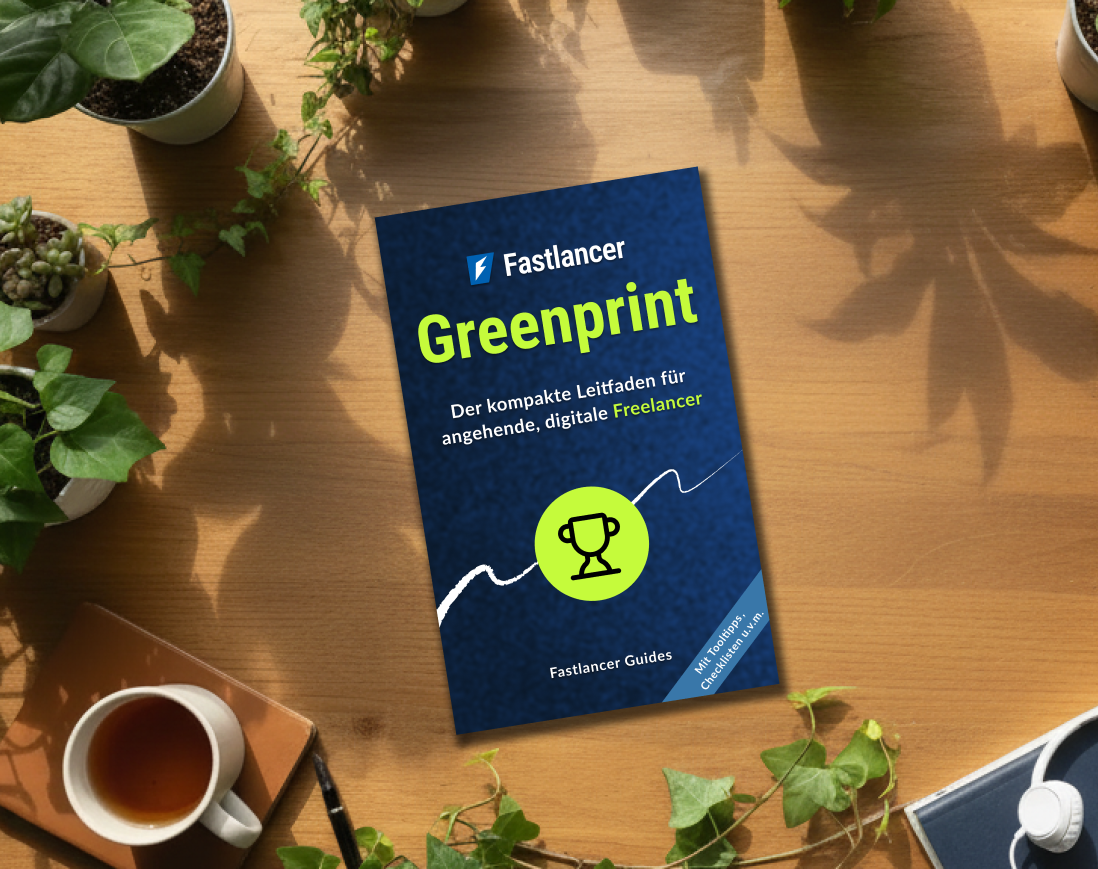
If you’d like to go deeper, check out our compact guide for digital freelancers: the Fastlancer Greenprint is now available on Amazon (english version coming soon).
Beginner-friendly tools that can also support you when starting your freelance career:



Explore more helpful guides for getting started as a freelancer:



Transparency notice: This post contains affiliate links. If you purchase a product or service through one of these links, we may receive a commission — at no additional cost to you. This helps support our work. Thank you.
Image credits: All screenshots, brand names, and product names used in our articles are the property of their respective owners. Images are used solely for illustration and review purposes. Screenshots created by us within the software show interfaces or elements of the respective tools and remain the intellectual property of the corresponding brands. Unless otherwise stated, images are sourced from the providers’ official websites. We link original sources where possible and recommend checking current information and pricing directly on the official product pages.