
Top 8 Income Streams for Freelancers: How to Build Sustainable & Passive Revenue
As a freelancer, relying on a single income source is risky. Client work can fluctuate, projects end unexpectedly, and income is rarely predictable. That’s why building multiple income streams — especially recurring and passive ones — is one of the most important steps toward long-term stability and independence.
In this guide, you’ll learn about the most relevant income streams for freelancers, from classic client work to scalable, passive revenue models that can generate income even when you’re not actively working.
Why Freelancers Should Diversify Their Income
Many freelancers start with one primary source of income: selling their time. While this works well in the beginning, it quickly becomes a bottleneck. Your income is directly tied to your availability, health, and capacity.
Diversifying income streams helps you:
Reduce financial risk
Smooth out income fluctuations
Build long-term financial stability
Scale beyond billable hours
Gain more freedom and flexibility
The goal isn’t to replace client work overnight, but to gradually add additional revenue streams that compound over time.

Symbolic Picture from unsplash.com
Idea 1: Client Work (Active Income)
Client projects are the foundation for most freelancers. This includes services like design, development, consulting, writing, marketing, or UX/UI work. You exchange time and expertise for money — usually on an hourly, daily, or project basis.
Advantages:
Immediate income
Predictable cash flow
Direct client relationships
Disadvantages:
Income stops when you stop working
Limited scalability
High dependency on availability
Client work is ideal as a base income, but rarely sustainable as the only long-term strategy.
Idea 2: Retainers & Subscriptions (Recurring Active Income)
Retainers are one of the most effective ways to stabilize freelance income. Instead of one-off projects, clients pay a fixed monthly fee for ongoing services such as maintenance, consulting, design support, or marketing.
Examples:
Monthly design or development retainers
Ongoing SEO or content support
UX consulting subscriptions
Website maintenance packages
This model combines active work with predictable, recurring revenue — a powerful step toward financial stability.

Symbolbild von unsplash.com
Idea 3: Affiliate Marketing (Passive Income)
Affiliate marketing allows freelancers to earn commissions by recommending tools, software, or services they already use and trust. When someone purchases through your referral link, you earn a percentage of the sale.
Common affiliate income sources:
Software tools (SaaS)
Hosting providers
Design, productivity or finance tools
Online platforms and services
Popular affiliate platforms:
Affiliate income scales well, especially when combined with blogs, newsletters, YouTube channels, or comparison articles. Once content ranks or gets traffic, it can generate income for years.
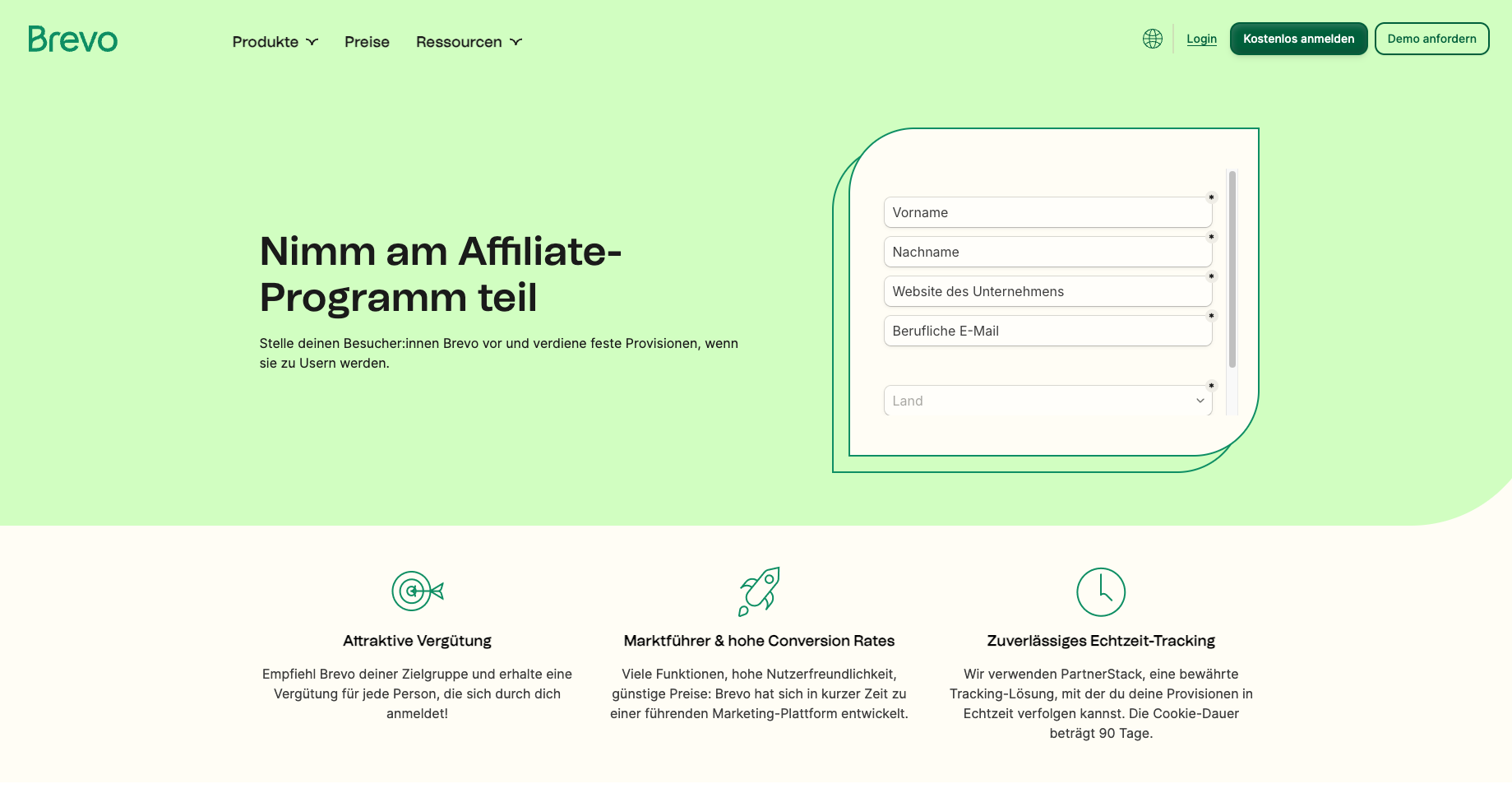
Brevo Affiliate-Program (excerpt from brevo.com)
Idea 4: Digital Products (Highly Scalable Passive Income)
Digital products are one of the most attractive income streams for freelancers. You create something once and sell it repeatedly with minimal additional effort.
Examples of digital products:
E-books and guides
Design systems and UI kits
Checklists and tool collections
Scripts, presets, or automation files
Popular platforms:
Shopify (digital downloads)
Amazon KDP (for books and guides)
Digital products work especially well when they solve a specific problem for a clear target audience.
Idea 5: Online Courses & Workshops (Semi-Passive Income)
Online courses allow freelancers to package their expertise into structured learning formats. While initial production takes time, courses can generate recurring income over long periods.
Formats include:
Self-paced video courses
Live or recorded workshops
Cohort-based courses
Masterclasses
Popular platforms:
Courses work best when you already have an audience or proven expertise in a niche.

Symbolic picture from unsplash.com
Idea 6: Memberships & Paid Communities (Recurring Passive Income)
Membership models offer recurring revenue through exclusive access to content, tools, or communities. Members pay monthly or yearly fees.
Examples:
Paid Slack or Discord communities
Exclusive content libraries
Tool collections or databases
Mentorship or office-hour access
This model benefits from strong community engagement and trust, but can be highly sustainable once established.
Idea 7: Licensing, Royalties & Usage Rights (Passive Income)
Freelancers can earn recurring income by licensing their work rather than selling it outright.
Examples
Stock illustrations, photos or videos
Fonts, icons or typefaces
Music, sound effects or motion assets
Design assets sold under license
Popular platforms:
Royalties may start small, but can accumulate significantly over time.
Idea 8: SaaS & No-Code Products (Advanced Passive Income)
Some freelancers build small software tools or no-code solutions that solve niche problems. While more complex, SaaS products can generate highly scalable recurring revenue.
Examples:
Micro-SaaS tools
Automation services
Internal tools turned into products
Platforms and tools:
This path requires technical or product skills, but offers long-term leverage.
How to Choose the Right Income Streams
Not every income stream fits every freelancer. Choose based on:
Your skills and expertise
Available time and resources
Risk tolerance
Long-term goals
A common strategy:
Start with client work → add retainers → introduce affiliate income → build digital products → expand into courses or memberships.

Symbolic picture from unsplash.com
Conclusion: Build Income That Works for You
Diversifying income streams is one of the smartest decisions freelancers can make. While client work provides immediate cash flow, passive and recurring income sources create stability, scalability, and freedom over time.
You don’t need to implement everything at once. Start small, test what works, and build step by step. Over time, multiple income streams can turn freelancing from a fragile setup into a resilient business.
Marketing tools that can also help you attract customers:


Check out more exciting guides for starting your own business here:



Transparency note: This post contains affiliate links. If you buy a product or service through one of these links, we may receive a commission — the price stays the same for you. This helps support our work. Thank you.
Image notes: All screenshots, brand names, and product names used in our articles are the property of their respective owners. Images are used solely for illustration and review purposes. Screenshots we created within the software show the interface or elements of the respective tools and remain the intellectual property of the corresponding brands. Unless stated otherwise, images are sourced from the providers’ official websites. We link the original sources when possible and recommend checking current information and pricing directly on the official product pages.